

There are moments when you look around at the world and wonder if everybody else received a script that somehow never made it to you.
The smiles look rehearsed. The outrage seems perfectly timed. The headlines arrive already packaged with the correct emotional response. Someone is always telling you what to buy, what to fear, what to celebrate, what to hate, what to believe, and—perhaps most importantly—what you are supposed to think about everyone else.
And after a while, you start wondering:
What if the whole thing is fake?
Not fake in the sense that nothing is real. The rain is real. Your mortgage is real. Your aching back is real. The person sitting across from you at the dinner table is real. Death is certainly real.
But the enormous story we have constructed around reality?
That’s where things get interesting.
We live inside an extraordinary machine of manufactured perception. Advertising has been doing it for generations. Television perfected it. Politics turned it into an industry. Social media transformed it into a 24-hour feedback loop. And now artificial intelligence is beginning to blur the distinction between something that happened and something that was simply made to look like it happened.
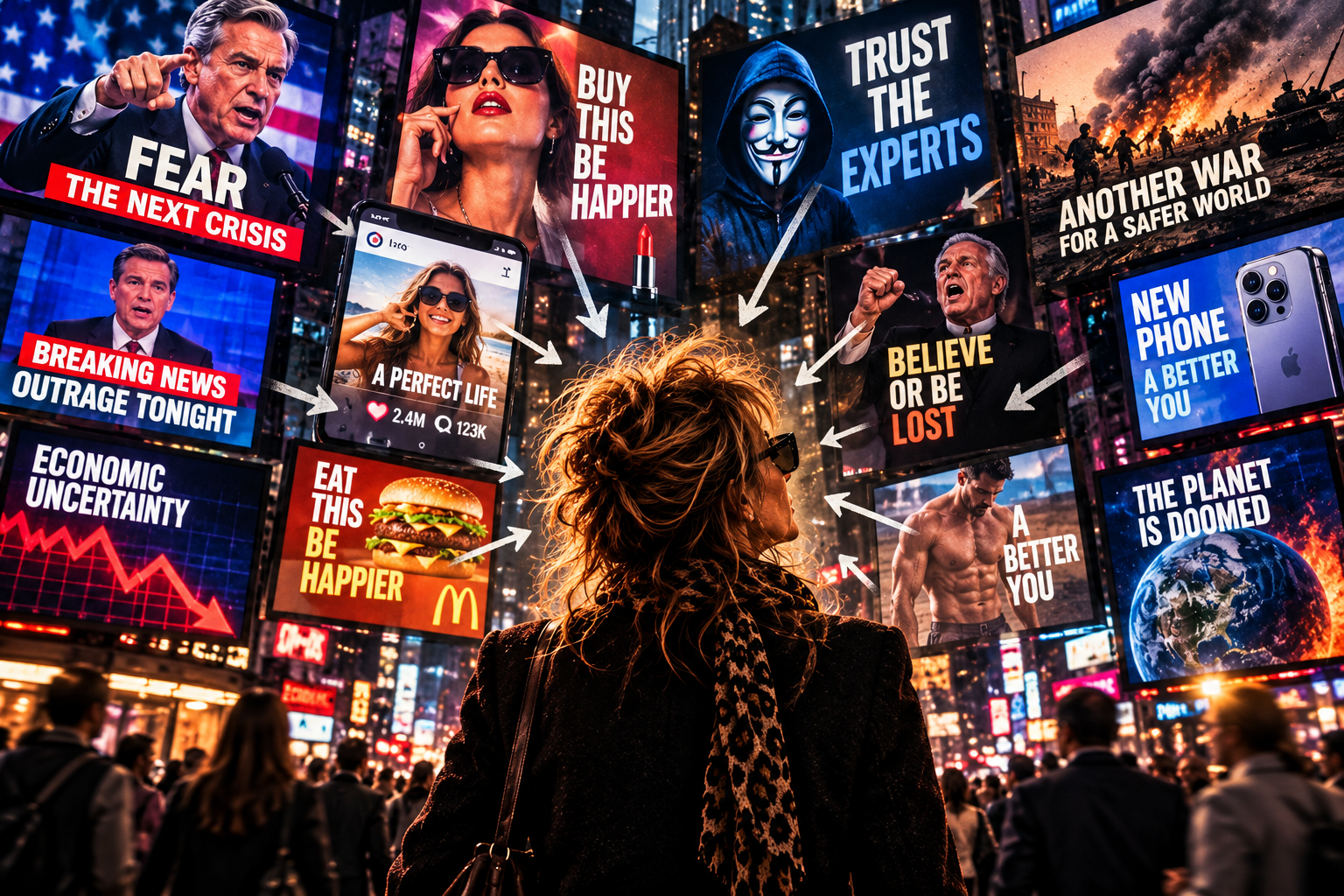

We are surrounded by images
People carefully construct their lives for Instagram. Corporations carefully construct their identities. Politicians carefully construct their public personalities. Influencers construct entire versions of themselves designed to be consumed by strangers. News organizations compete for attention. Advertisers sell us lifestyles disguised as products.
Everybody is performing. And here’s the strange part: most of us know it. We know the photograph was edited. We know the influencer isn’t living that perfect life every morning. We know the advertisement isn’t really selling happiness. We know the politician’s handshake is part of the performance. We know the television personality has producers, writers, makeup artists, researchers and a carefully constructed persona.
And yet we keep watching. Maybe that’s because humans have always been fascinated by spectacle. Ancient kings understood spectacle. Roman emperors understood spectacle. Religious institutions understood spectacle. Governments understood spectacle. Hollywood understood spectacle. We didn’t invent manufactured reality. We just got really, really good at it. The difference today is speed.
A lie can travel around the planet before the truth has finished putting its shoes on. A manufactured controversy can become tomorrow’s national conversation. A person can become famous without anyone knowing exactly why. A photograph can be created without a camera. A voice can be recreated without the person speaking. A video can show something that never happened.
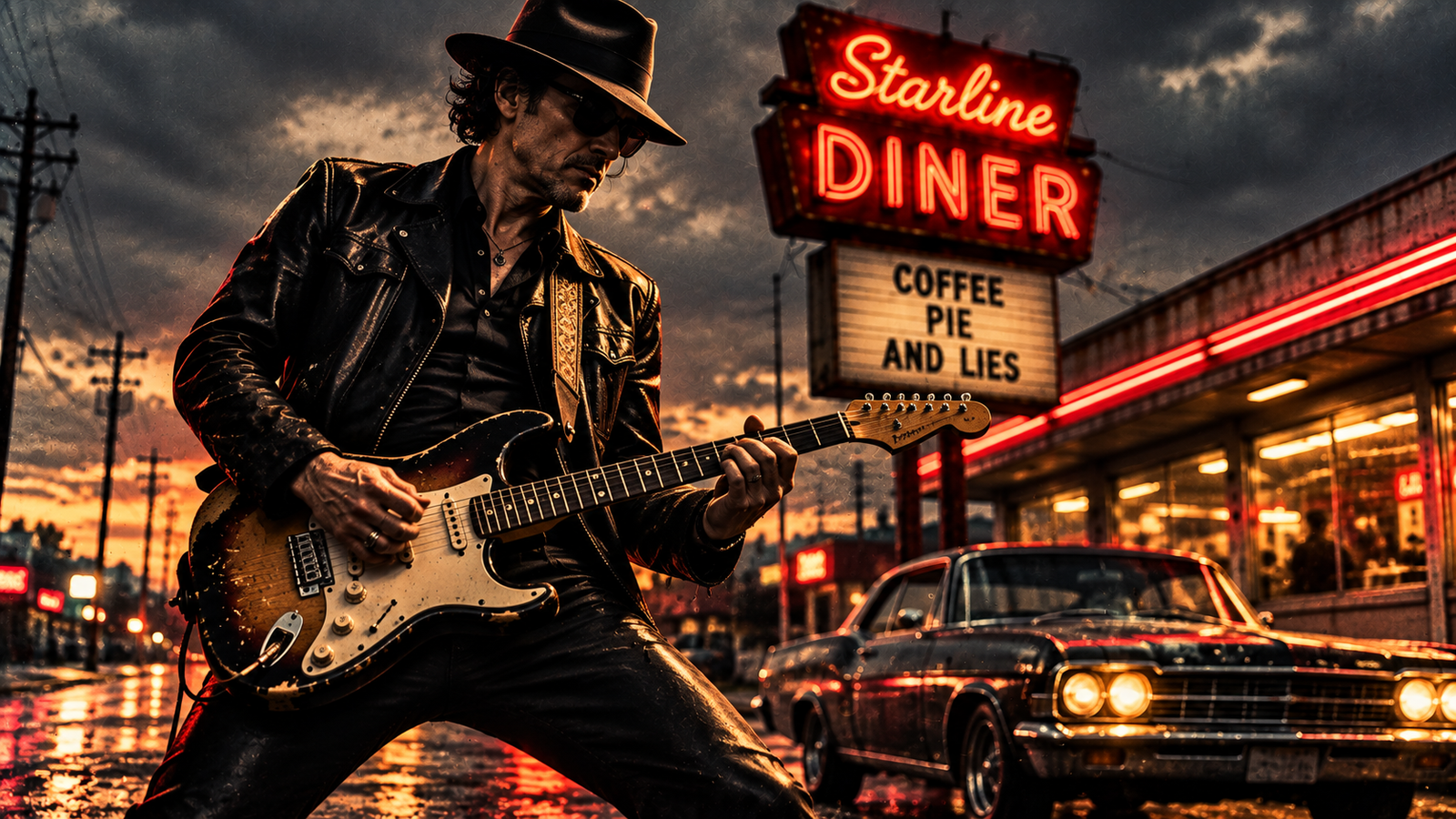
The technology isn’t necessarily the problem. The problem is that our ability to manufacture reality is advancing faster than our ability to question it. And maybe that’s why so many people feel exhausted. We’re constantly being asked to react.
React to this. Fear that. Buy this. Support that. Be outraged. Be inspired. Be offended. Be grateful. Be angry. Be afraid. Click. Scroll. Share. Repeat.
It’s exhausting. Sometimes I think what people really want isn’t another explanation. They just want five minutes of silence. Five minutes without somebody trying to sell them something. And that’s where Betty enters the story. Betty isn’t a revolutionary. She’s not standing on a podium giving a speech. She’s not trying to save humanity.
She’s simply watching. She’s sitting there looking at the spectacle and slowly realizing that she doesn’t believe much of it anymore. The politicians talk. The experts argue. The influencers perform. The corporations promise.
The preachers preach. The cameras roll. Everybody shakes hands. Everybody smiles. Everybody wants something. And Betty just looks at them. Nah. That’s the attitude behind Betty Does Not Like This World.
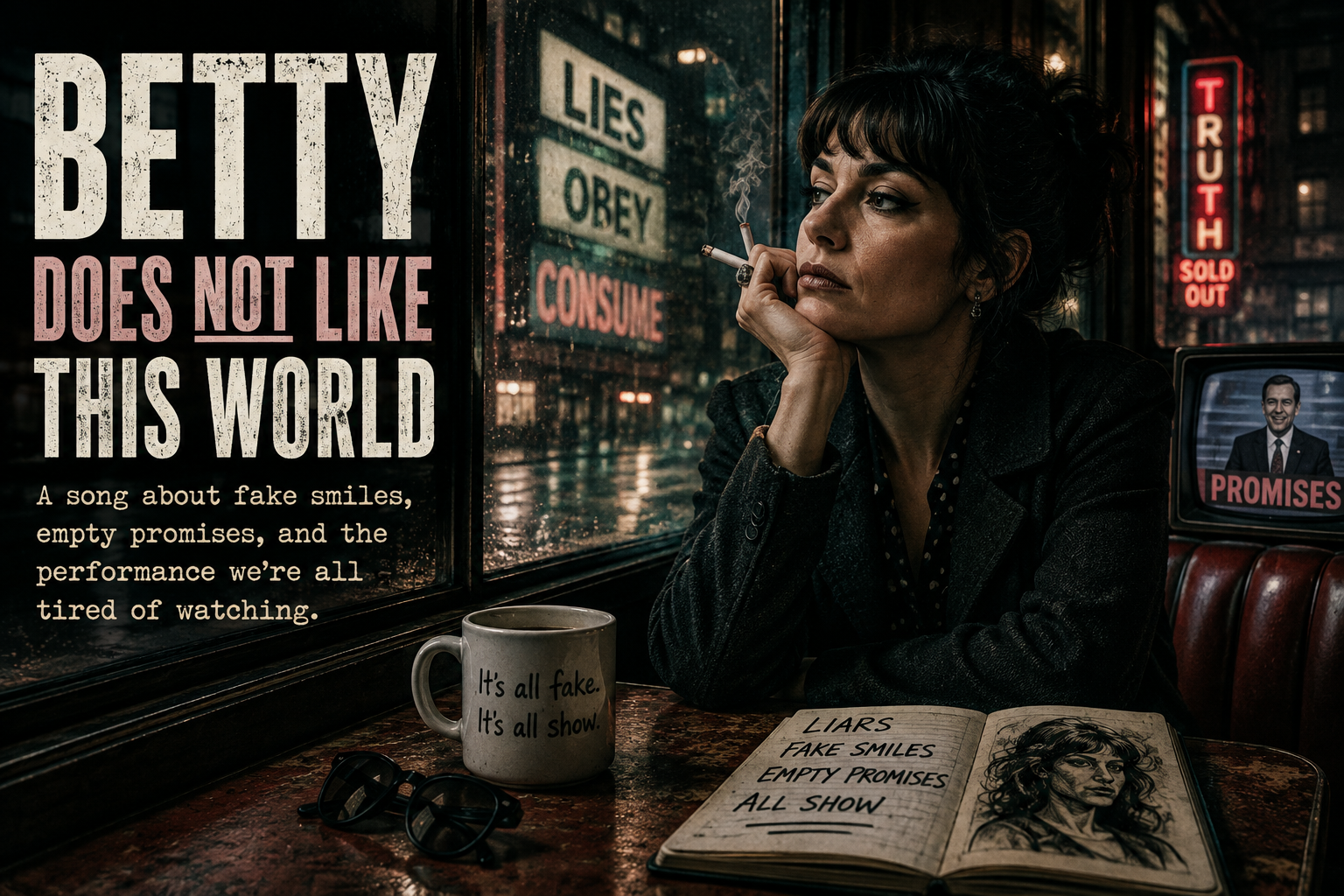
The song isn’t really about one particular politician, one particular corporation, one particular television network or one particular social media platform. It’s about the feeling of stepping outside the machinery for a moment and looking back at it. It’s about that little voice in your head that says:
Wait a minute.
- What exactly am I watching?
- Who benefits from this?
- Why am I being told to care about this?
- Why is everyone suddenly angry about the same thing?
- Why does everyone suddenly have the same opinion?
- Why does everybody seem to be selling something?
And most importantly:
- What happens if I simply refuse to buy it?
Maybe that’s the most rebellious thing left. Not outrage. Not screaming. Not joining another online army. Just refusing to participate in the performance. You don’t have to believe everything you’re told. You don’t have to hate the person you’re instructed to hate. You don’t have to worship the person you’re instructed to worship. You don’t have to buy the product. You don’t have to join the outrage. You can simply step back. Watch. Think. Laugh. And say: Nah.
Because maybe the world isn’t fake. Maybe something more complicated is happening. Maybe the world is real, but the stories we’re constantly being sold about the world are manufactured. And if that’s true, then perhaps the most important question isn’t “What’s real?”
Perhaps it’s: “Who is creating the reality I’m being asked to believe?” That’s the question Betty keeps asking. And she doesn’t seem particularly impressed with the answers.
BETTY DOES NOT LIKE THIS WORLD
I made a music video about her. It’s dark. It’s funny. It’s cynical. It’s soaked in rain, neon, Americana and a little bit of 1990s Brit-pop attitude. And Betty has seen enough. Watch it. Then decide for yourself.
Is the whole thing fake?