
What if the answer to a century of conflict in the Middle East were not another partition, another war, or another generation raised to hate—but an entirely new political beginning?
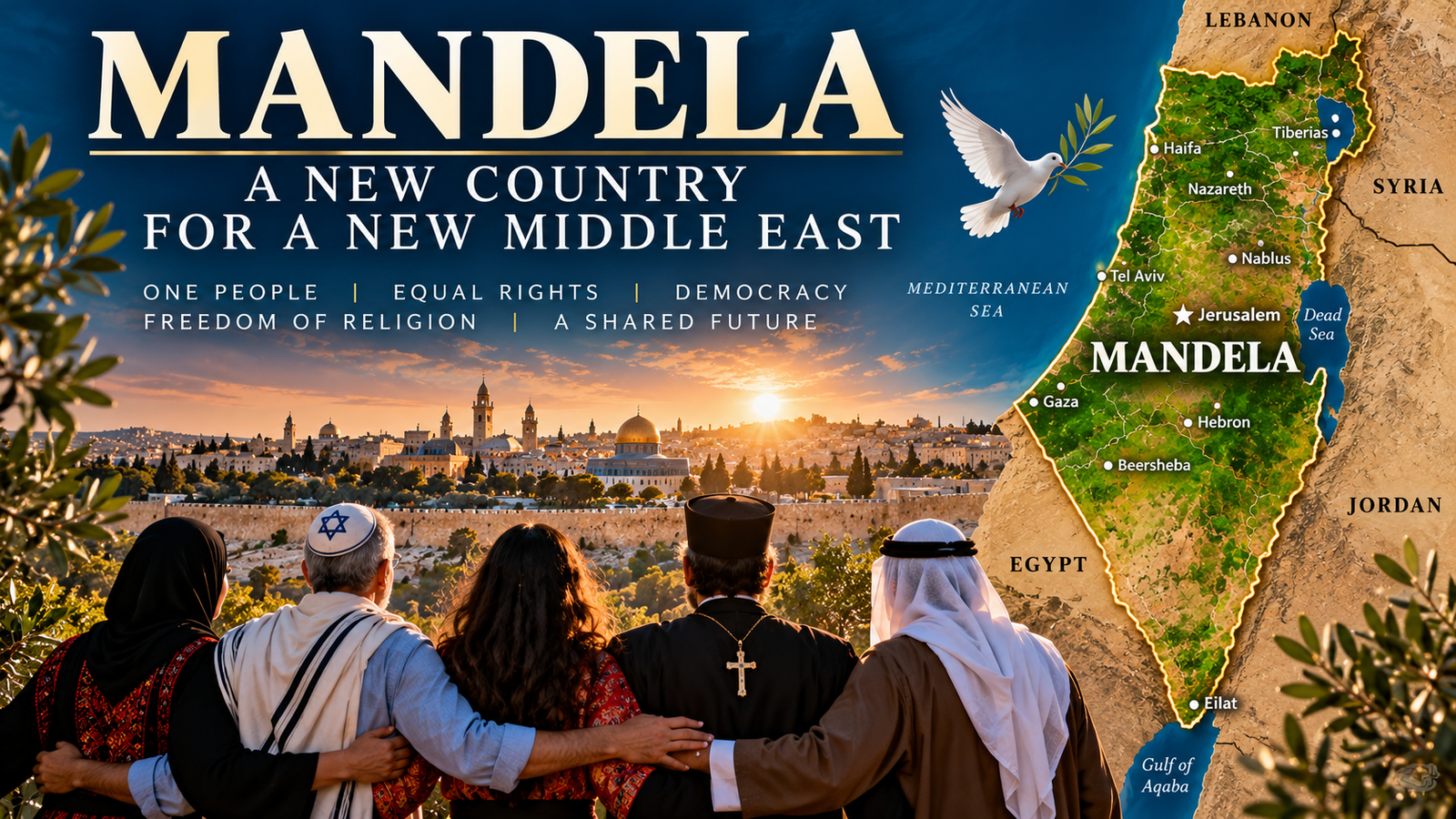
I propose a radical idea: replace the present state of Israel with a new democratic country called MANDELA…
…established on the principles of equality, shared citizenship, religious freedom, and justice for all. Integrate this new country into a broader Middle East Union that brings together the nations of the region in a common framework for peace, economic cooperation, and collective security.
This is not a call to replace one religious or ethnic supremacy with another. It is a call to end the idea that any religious, ethnic, or national group should have a permanent political entitlement to dominate another.
It is a proposal to imagine something fundamentally different.
One Hundred Years of Failure Demands a New Vision
For more than a century, the Israeli-Palestinian conflict has generated displacement, occupation, wars, terrorism, military repression, political extremism, and profound human suffering.
Generations of Palestinians have lived with dispossession, statelessness, occupation, blockade, and the denial of fundamental rights. Israelis have experienced wars, terrorist attacks, rocket fire, hostage-taking, and the persistent fear of violence. The October 7, 2023, attacks and the catastrophic destruction that followed in Gaza demonstrated once again the terrible human consequences of a conflict without a sustainable political settlement.
The international community has repeatedly attempted to manage this conflict without resolving its fundamental contradictions.

The two-state solution has been the principal international framework for decades. Yet settlement expansion, territorial fragmentation, political division, and declining trust have made its realization increasingly difficult.
Meanwhile, the idea of a single state governed by one group at the expense of another is equally unacceptable.
We cannot build a lasting peace on permanent inequality. Nor can we build it on the assumption that one population must remain politically dominant for another population to feel secure.
If the existing political arrangements cannot deliver equality and peace, we must have the courage to imagine a different arrangement.
That is where MANDELA begins.
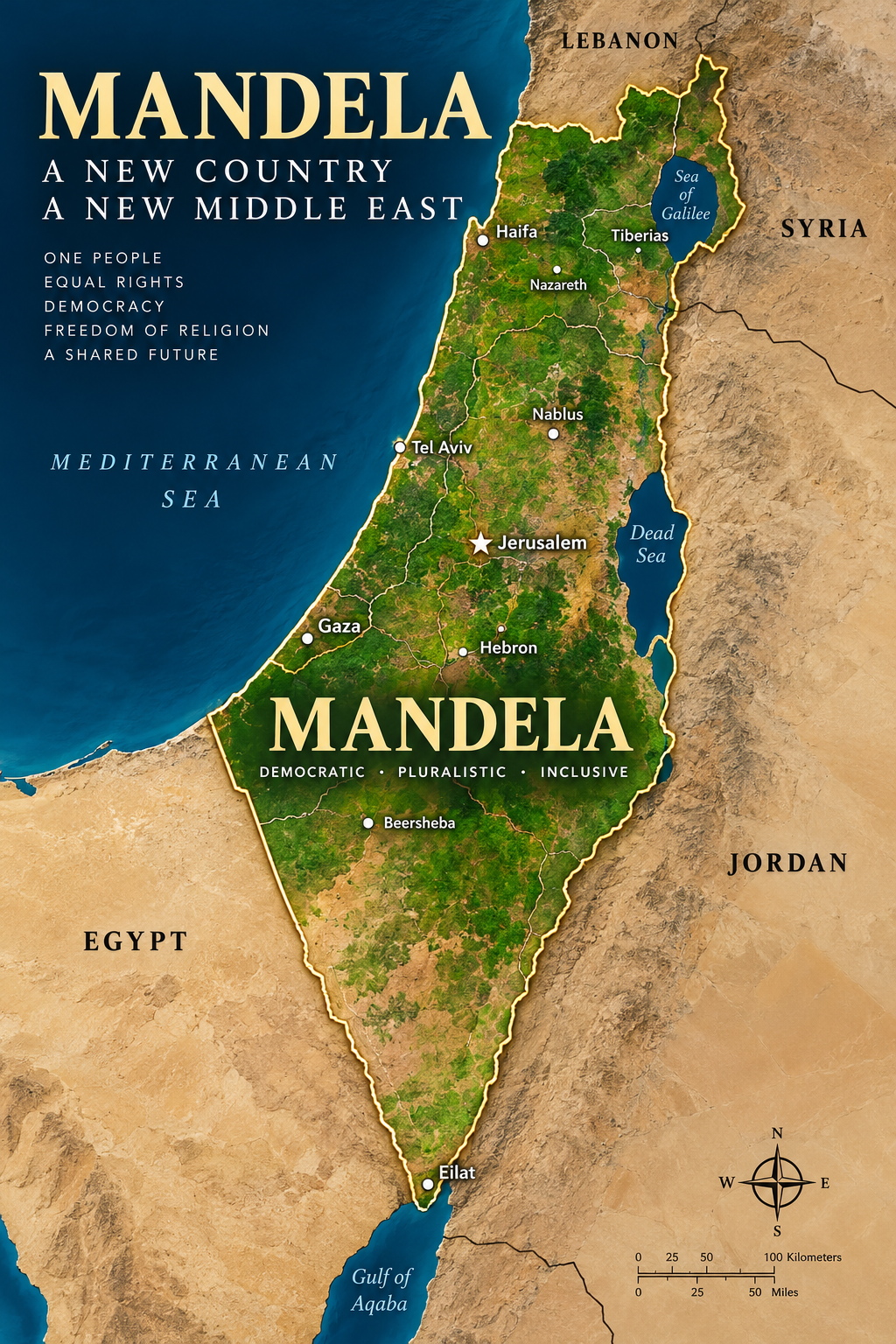
Why Call the New Country MANDELA?
Nelson Mandela became an international symbol of the struggle against apartheid, political domination, and racial discrimination. His legacy represents the possibility that a society divided by decades of injustice can pursue a common future without making permanent enemies of its people.
The proposed country of MANDELA would draw inspiration from those principles.
The name would communicate a message to the world: this is not simply Israel under another name, nor Palestine under another name. It is a new political project founded on equal citizenship.
The name is symbolic. The real achievement would be a constitutional system in which the rights of every person are protected regardless of ancestry, religion, ethnicity, or national origin.
A Jewish citizen would possess the same civil and political rights as a Muslim or Christian citizen. Palestinians would enjoy the same protection, dignity, and freedom as everyone else. Druze, Samaritans, people of other faiths, and those who follow no religion would be equal before the law.
- No religious group would own the state.
- No ethnic group would possess superior citizenship.
- No person would be required to surrender their identity to participate in a shared political community.
- MANDELA would belong to its citizens, not to a religion.
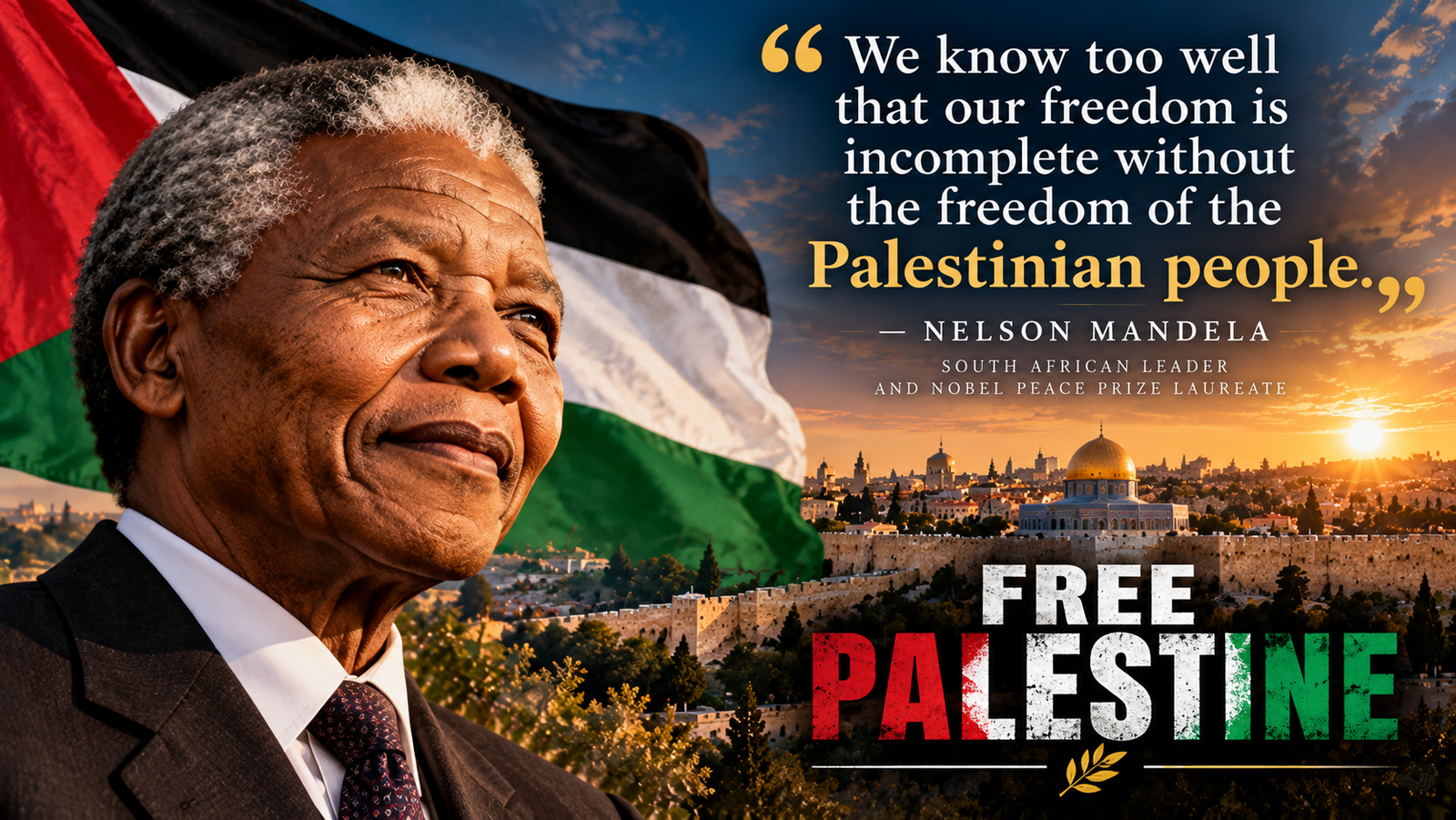
Ending Zionist Political Supremacy Without Expelling a People
Let us be clear about the political objective.
I oppose Zionism as a system of political nationalism that privileges Jewish national self-determination in the territory while denying Palestinians equal rights or an equivalent claim to political freedom. I believe that any future settlement must end discriminatory institutions and establish equal citizenship for all.
That does not mean every Jewish person is a Zionist, that every Zionist holds identical political beliefs, or that Jewish identity itself is the problem. Jewish people, like Palestinians and other peoples, possess diverse political views and legitimate interests in security, cultural continuity, and collective life.
The distinction between opposing a political ideology and targeting people because of their beliefs or ancestry is essential.
My proposal calls for a fundamental transformation of the political order, not the collective punishment of a population.
I reject a future in which Jewish Israelis, Palestinian Arabs, or anyone else is subjected to forced deportation simply because of their identity or political affiliation. Expelling people on that basis would reproduce the very injustice this project seeks to end.
Instead, any transition must establish equal rights, dismantle discriminatory laws and practices, provide effective remedies for dispossession, and guarantee that all inhabitants can live securely in their homes.
Where individuals are credibly suspected of committing crimes, investigations and prosecutions must follow evidence, due process, and the rule of law—not collective accusations against an entire population.
A new country cannot credibly promise equality while beginning its existence with mass expulsions.
The objective must be to end domination, not to reverse the identity of the people doing the dominating.
To receive new posts and support Johnny Punish, consider becoming a free or paid subscriber.
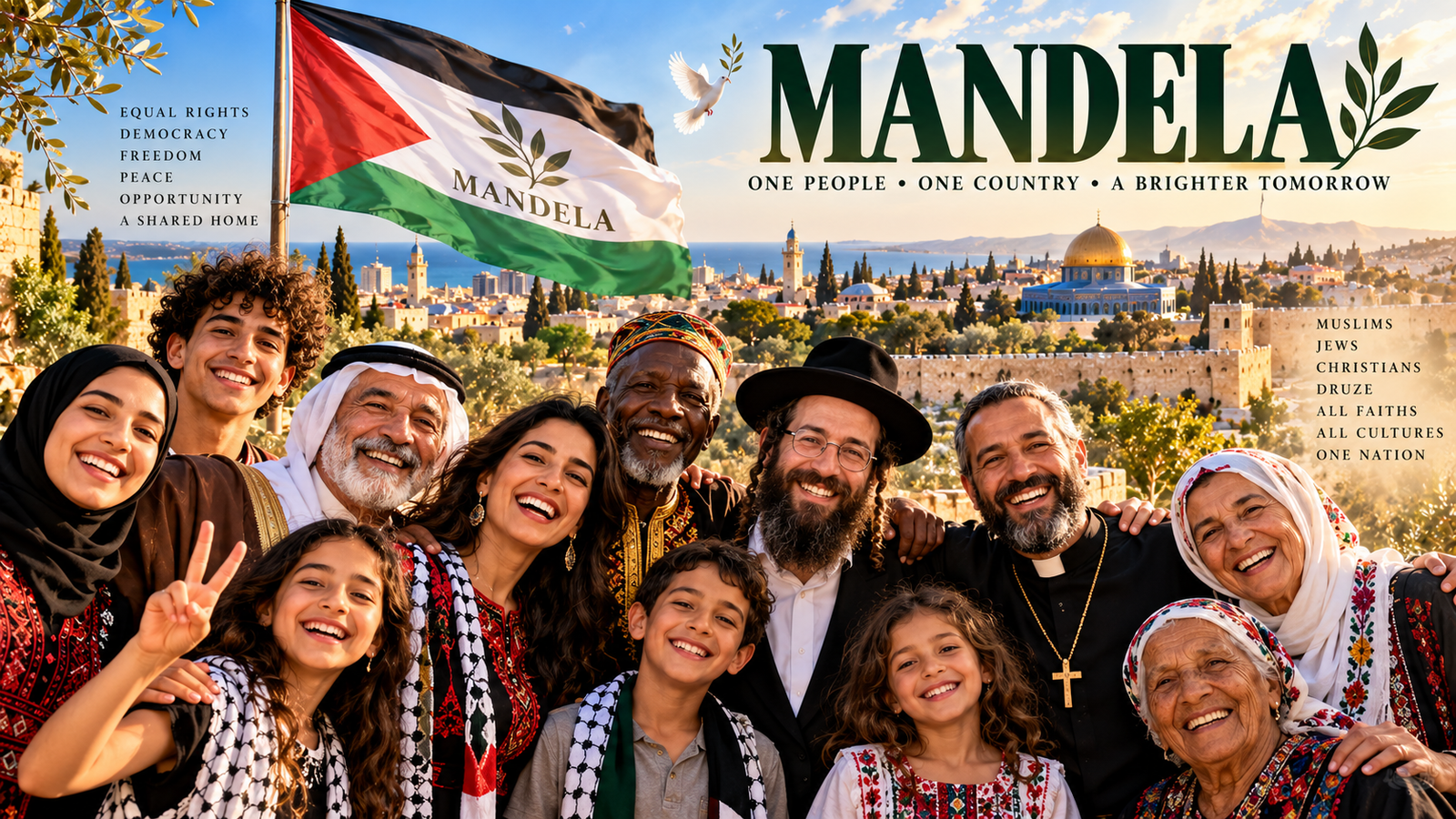
The Citizens of MANDELA: A Shared Future
Imagine a constitutional convention bringing together Palestinians, Israeli Jews, Arab citizens of Israel, Christians, Muslims, Druze, secular citizens, and representatives of the region’s other communities.
Their task would be to design a country in which no community must fear that losing an election means losing its rights.
MANDELA would require a constitution built around several foundational principles.
1. Equal citizenship
Every citizen would possess equal legal status and equal protection under the law. The constitution would prohibit discrimination based on religion, ethnicity, sex, ancestry, or political belief.
2. Democratic government
Citizens would elect their representatives through free and fair elections. Independent courts, an impartial electoral authority, a free press, and constitutional safeguards would protect the democratic process.
3. Freedom of religion and conscience
Synagogues, mosques, churches, and other places of worship would receive equal legal protection. Religious minorities would be free to practice their faith, and nonreligious citizens would be equally protected.
4. A shared homeland
Jewish Israelis and Palestinians would not be expected to erase their histories, languages, cultures, or identities. Hebrew and Arabic would have equal official standing, with appropriate protections for other languages and communities.
5. Justice for historical wrongs
A truth and reconciliation process would investigate historical abuses and provide mechanisms for restitution, compensation, property claims, and acknowledgment of suffering. The rights of refugees and displaced people would require serious negotiations consistent with international law and the rights of everyone affected.
6. Security for everyone
A unified security framework would protect all communities against terrorism, hate crimes, political violence, and unlawful state action. Civilian protection and accountability would be nonnegotiable.
7. Economic opportunity
The country would invest in housing, healthcare, education, water infrastructure, renewable energy, transportation, technology, and employment. Economic cooperation would help turn peace from an abstract promise into a tangible improvement in people’s lives.
These principles would have to be enforceable. Equality written on paper is insufficient without institutions capable of defending it.
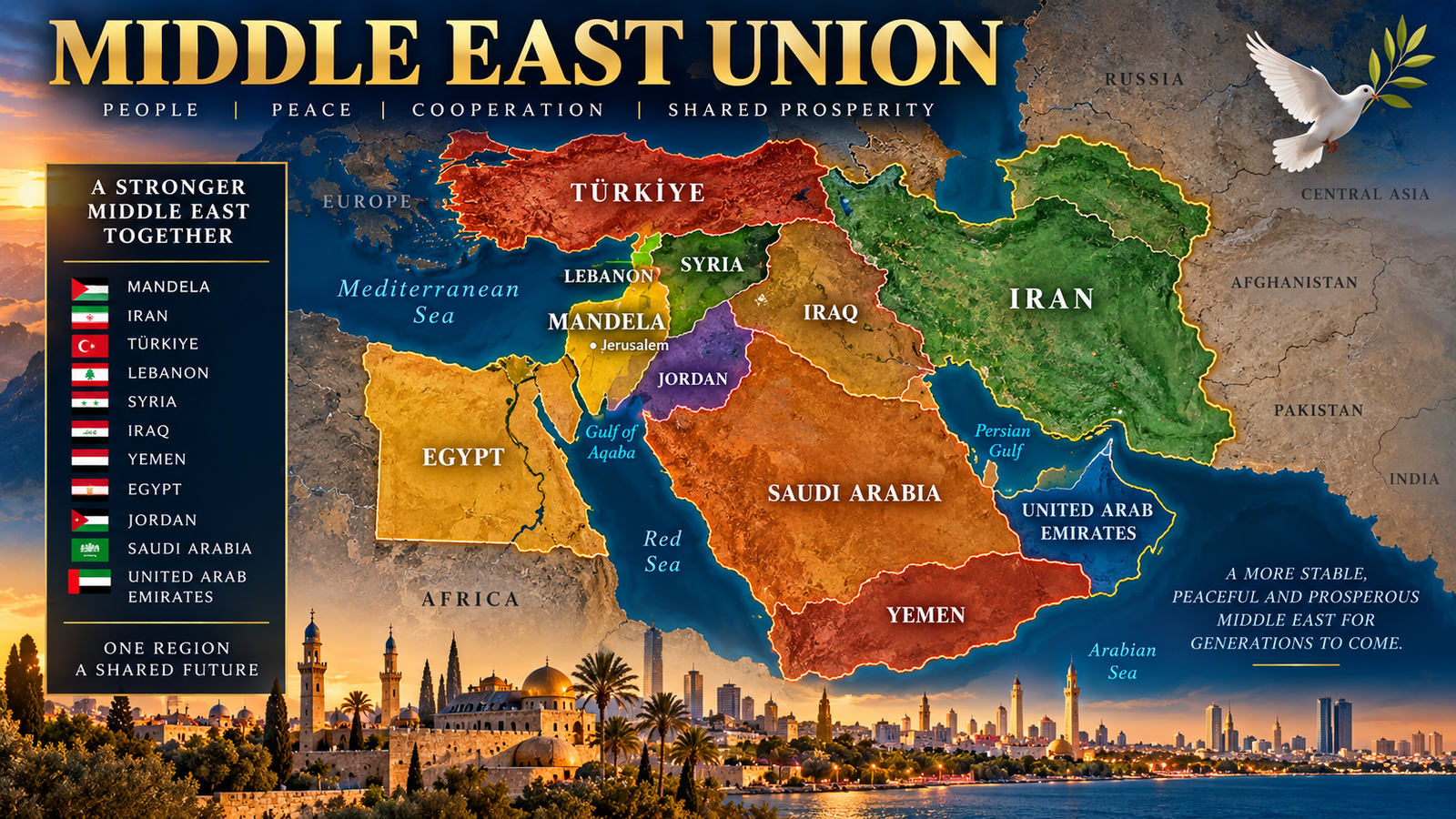
From MANDELA to a Middle East Union
The second part of this proposal is regional.
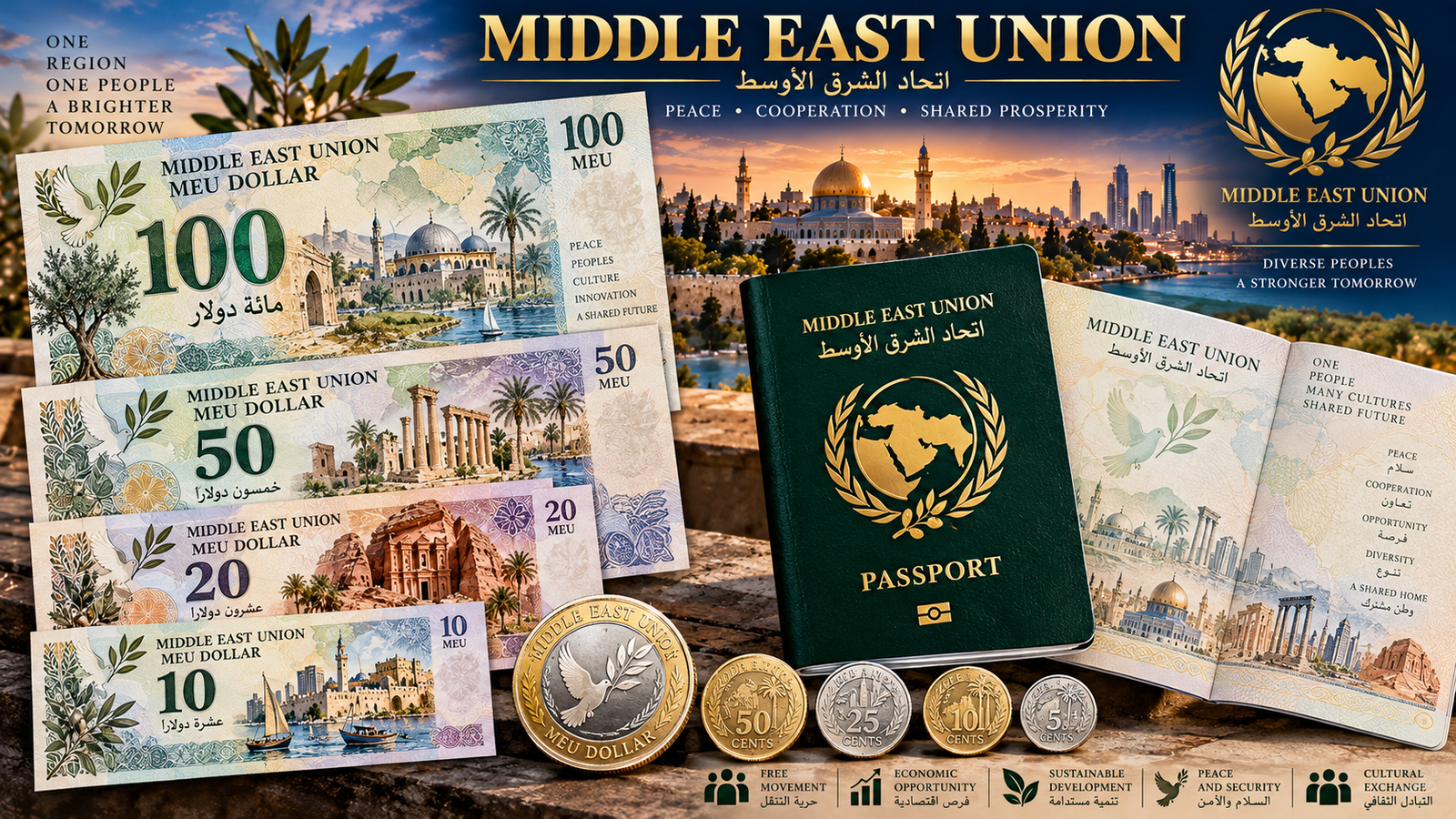
MANDELA should not emerge as an isolated state surrounded by distrust and militarization. It should become part of a broader Middle East Union, an organization designed to make cooperation more beneficial than perpetual confrontation.
The proposed founding participants would include:
- Iran
- Türkiye
- Lebanon
- Syria
- Iraq
- Yemen
- Egypt
- Jordan
- Saudi Arabia
- The United Arab Emirates
- MANDELA, representing the shared territory and population of the present Israel-Palestine conflict
Additional countries and territories could participate through a negotiated accession process.
This would be an ambitious undertaking. These societies have different political systems, security concerns, economic interests, and historical relationships. Membership could not simply be declared into existence; it would require negotiated treaties, public legitimacy, and credible protections for sovereignty and human rights.
Nevertheless, the potential benefits deserve serious consideration.
A regional union could develop shared water infrastructure, coordinate energy networks, expand trade, improve transportation, establish scientific partnerships, and create mechanisms for resolving disputes before they become wars.
It could facilitate humanitarian cooperation and reconstruction while reducing incentives for regional powers to treat neighboring populations as instruments in a geopolitical struggle.
A customs union or common market might eventually become possible. Freedom of movement could be developed gradually, subject to negotiated rules and safeguards. A regional parliament or assembly could provide a forum for public representation.
Collective security arrangements could reduce the risk of interstate war, provided they respect the independence of participating states and protect their populations.
The union would not require every member to abandon its national identity or adopt the same domestic political system overnight. It would require agreement on common obligations, peaceful dispute resolution, and the protection of fundamental rights.
The Middle East needs institutions that reward cooperation rather than political leaders who benefit from permanent confrontation.
USrael Hates The World | Johnny Punish
What About the United States and Its Role in the Region?
My proposal also challenges the longstanding strategic relationship between the United States and Israel, which critics sometimes refer to as “USrael.”
The United States has played a major role in Israel’s security, including through military assistance and diplomatic support. That relationship has significant consequences for regional power dynamics and international perceptions of accountability.
I believe US policy should be fundamentally reassessed.
Military assistance and diplomatic protection should not be unconditional. They should be tied to compliance with international law, the protection of civilians, and credible progress toward equal rights and a durable political settlement.
At the same time, a peaceful Middle East cannot depend on replacing one outside patron with another. Neither Washington, Moscow, Beijing, nor any other external power should dictate the political future of the region’s peoples.
The proposed Middle East Union should have the capacity to negotiate with global powers from a position of regional cooperation rather than fragmentation.
The ultimate objective is not to expel Americans or any other nationality from the region. It is to end external domination, reduce destructive foreign intervention, and allow the people who live there to shape their own future.
Regional independence must be grounded in political agency, not collective hostility toward foreign populations.
Israel’s Burning Itself To The Ground | Johnny Punish | Genocide Reggae
How Would MANDELA Actually Be Created?
A transformation of this magnitude cannot responsibly be imposed by decree. It would require a legitimate political process involving the people who would live under the new constitutional order.
I propose a phased process.
Phase One: International initiative
A coalition of governments, civil society organizations, human rights advocates, Palestinian representatives, Israeli representatives, and regional institutions would establish an international forum to examine a shared-state settlement and a Middle East Union.
The forum would publish a constitutional framework, assess competing proposals, and establish clear protections for every affected community.
Phase Two: Immediate protections
All parties would be pressed to protect civilians, release unlawfully held hostages, end attacks on civilians, comply with international humanitarian law, and facilitate humanitarian assistance. Measures addressing occupation, settlement activity, discrimination, and other structural grievances would form part of the political negotiations.
Phase Three: A representative constitutional convention
Representatives would negotiate the proposed state’s constitutional structure, citizenship rules, electoral arrangements, security institutions, language protections, property claims, and transitional justice mechanisms.
Participation would have to be meaningful, including for refugees and displaced populations whose rights and futures are directly affected.
Phase Four: Public consent
The final framework would require a legitimate process of public approval, with safeguards against intimidation and the exclusion of affected communities. Its legal implementation would have to comply with applicable international law.
Phase Five: Democratic transition
A transitional administration would establish independent institutions, prepare elections, integrate or reform security institutions under civilian authority, and protect the rights of all residents.
Phase Six: Regional integration
MANDELA would negotiate its entry into the Middle East Union, beginning with practical cooperation on trade, infrastructure, humanitarian affairs, water, energy, and conflict prevention.
The process would be difficult. It could take years. It would require compromises and guarantees that many political actors would initially reject. But a serious proposal must be judged not by whether it is easy, but by whether it offers a credible path toward a more just and peaceful future.
GAZA: We’re All Human Beings | Johnny Punish (Haunting Piano)
The Moral Test: Can We Build Something Better?
The greatest danger in political transformation is reproducing the injustice one claims to oppose.
If MANDELA were founded by expelling Jewish citizens, discriminating against religious minorities, or denying equal rights to political opponents, it would fail its own founding principles before it began.
If it merely changed the name on the flag while preserving unequal citizenship, it would be a rebranding exercise, not a revolution in political morality.
If the Middle East Union became a vehicle for authoritarian governments to suppress dissent, it would betray the democratic vision that gives this proposal meaning.
The project must therefore be measured against a simple test: would an ordinary Palestinian, an ordinary Jewish Israeli, an Arab Christian, a Druze citizen, a secular citizen, and a member of another minority all be able to live without fear of discrimination or political persecution?
Could they vote, worship, criticize the government, raise their children, pursue their ambitions, and enjoy the protection of the law on equal terms?
If the answer is yes, MANDELA would represent a genuinely new beginning.
If the answer is no, the name would mean nothing.
A Call for a New Middle East
- I call for an international coalition to move beyond the assumption that the present political arrangements must continue indefinitely.
- I call for a serious examination of a single democratic state in the territory between the Jordan River and the Mediterranean Sea, founded on equal citizenship and collective security.
- I call for an end to political systems that privilege one community at the expense of another.
- I call for a regional union that makes cooperation, reconstruction, and shared prosperity central objectives.
- And I call for a future in which Jewish and Palestinian children do not inherit an obligation to fear or hate one another.
The name MANDELA is my proposed symbol for that future.
It would honor the principle that historical injustice cannot be repaired by establishing a new system of collective punishment. It would declare that no people should be condemned to permanent subordination and no people should be collectively expelled because of their identity.
The transition would require justice for Palestinians, security for Jewish Israelis, equality for every community, and the voluntary participation of the people whose lives would be transformed.
It would require courage from political leaders, honesty from the international community, and a willingness to abandon assumptions that have failed to produce peace.
The choice is not between preserving the status quo forever and forcing millions of people from their homes. There is another possibility: a negotiated transformation that makes equal rights the foundation of a shared political future.
And Still The Palestinian Mothers Call | Johnny Punish
MANDELA: One country. Equal citizenship. Freedom of religion. Justice for all.
A Middle East Union: Cooperation over confrontation. Democracy over domination. Peace over perpetual war.
That is the vision I want the world to debate—not as a demand that one people disappear, but as a challenge to build a political order in which no people must live at the expense of another.
The future of the Middle East should belong to the people who call it home.
And the time to imagine something better is now.