
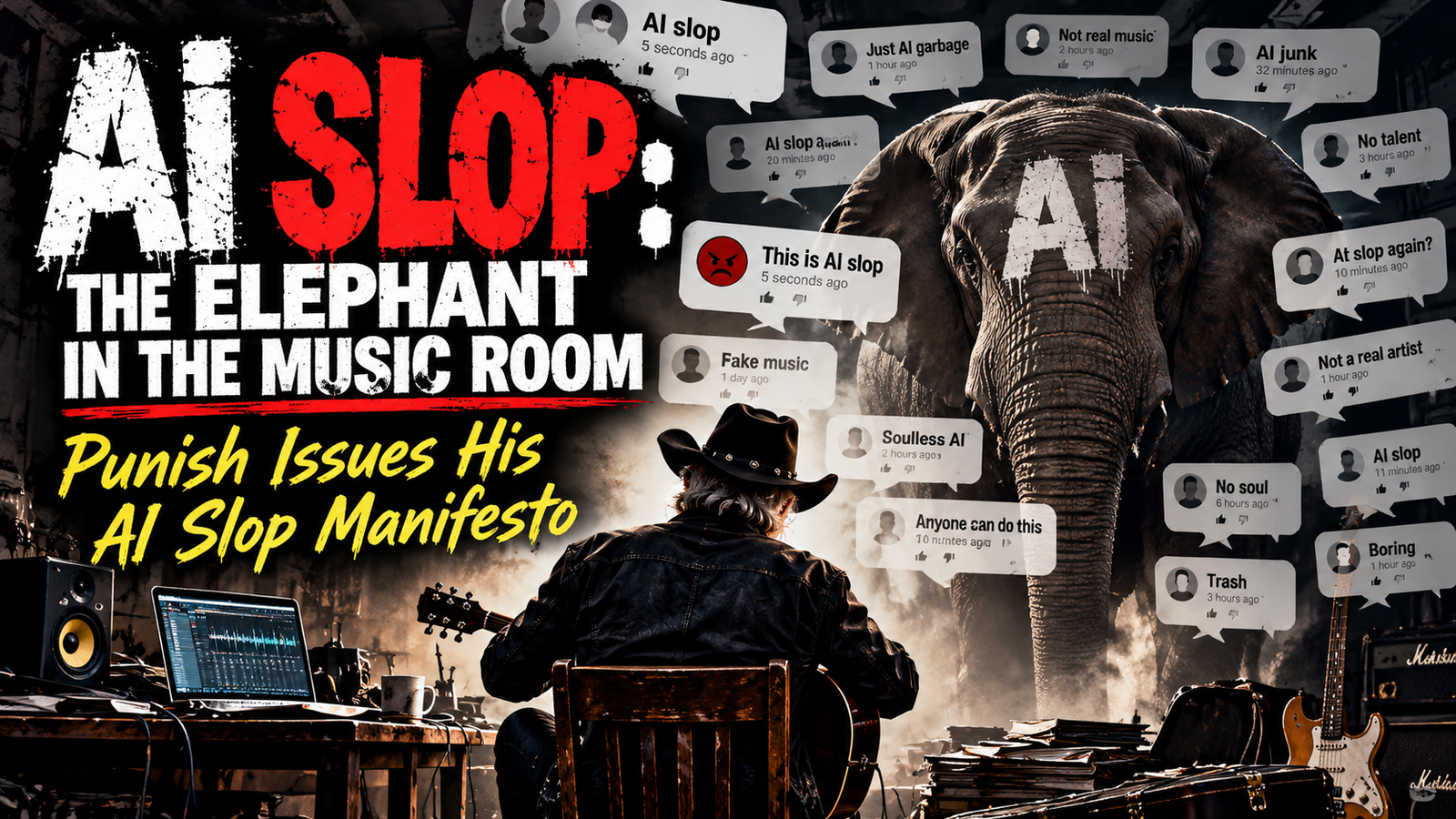
They called my song “AI slop” five seconds after it started. They didn’t hear the song, didn’t hear the message, and didn’t bother to consider the person behind it. They heard something that triggered their anti-AI reflex, slapped a label on it, and moved on. Apparently, five seconds is all it takes to become a music critic in the age of artificial intelligence. Welcome to the new musical puritanism, where you don’t have to listen to the music before deciding it’s garbage.
The Song Is Mine. The Message Is Mine. What’s the Problem?
Let’s get something straight. I released a song called “Farewell My USA”. It’s a deeply personal song about me, my feelings, my experiences, and my disillusionment with a country I no longer recognize. It’s about saying farewell to a place whose political direction and values have left me disgusted. The message is mine, the perspective is mine, and the artistic decisions behind the work are mine. This isn’t some anonymous corporation pumping out background music to sell advertising. It’s my story, my point of view, and my message to the world.
Yes, I use AI music tools. Yes, technology helps me bring my ideas to life. And yes, I use those tools to get my music out into the world faster, more effectively, and sometimes in ways I couldn’t achieve on my own. So what?
- Does using a tool automatically invalidate the person using it?
- Does the presence of AI erase the songwriter, or does a machine suddenly become the author of my life because I used technology to express what I’m feeling?
I don’t think so. I’m not claiming that every instrument in every recording was performed by my own hands. I’m saying that I’m the artist directing the work, making creative decisions, shaping the presentation, and communicating a message that matters to me.
That’s the distinction these knee-jerk critics refuse to acknowledge. The technology used to create a work and the human meaning behind that work are two different things. You can dislike the sound, criticize the arrangement, or argue that the production doesn’t work. You’re entitled to your opinion, and I don’t expect everyone to like my music. But dismissing something as garbage before you’ve even heard it isn’t criticism. It’s prejudice wearing a critic’s hat.
Where Were You When I Was Using Digital Drums?
I’ve used digital production tools, FL Studio, virtual instruments, VSTs, programmed drums, and electronic sounds to help build my music. I didn’t personally sit behind a drum kit and perform every drum track, and I didn’t necessarily pick up a physical guitar to perform every guitar sound. I used technology to create the music I wanted to hear. Somehow, that was perfectly acceptable. Nobody was standing over my shoulder screaming, “That’s digital drum slop!” Nobody was insisting that a song was artistically worthless because a virtual instrument produced a sound instead of a musician physically striking a drum or plucking a string.

Why? Because those technologies have become normal. We’ve grown accustomed to them, and they’ve been absorbed into the musical landscape. Electronic tools became instruments, software became a studio, and programmed beats became part of the creative vocabulary. Now AI has arrived, and suddenly some people want to throw the whole thing out the window. Apparently, digital technology is perfectly acceptable once everyone has forgotten how controversial it was. Yesterday’s technological scandal becomes tomorrow’s standard equipment. The only thing that changes is the name of the technology and the generation of musicians complaining about it.
We’ve Seen This Movie Before
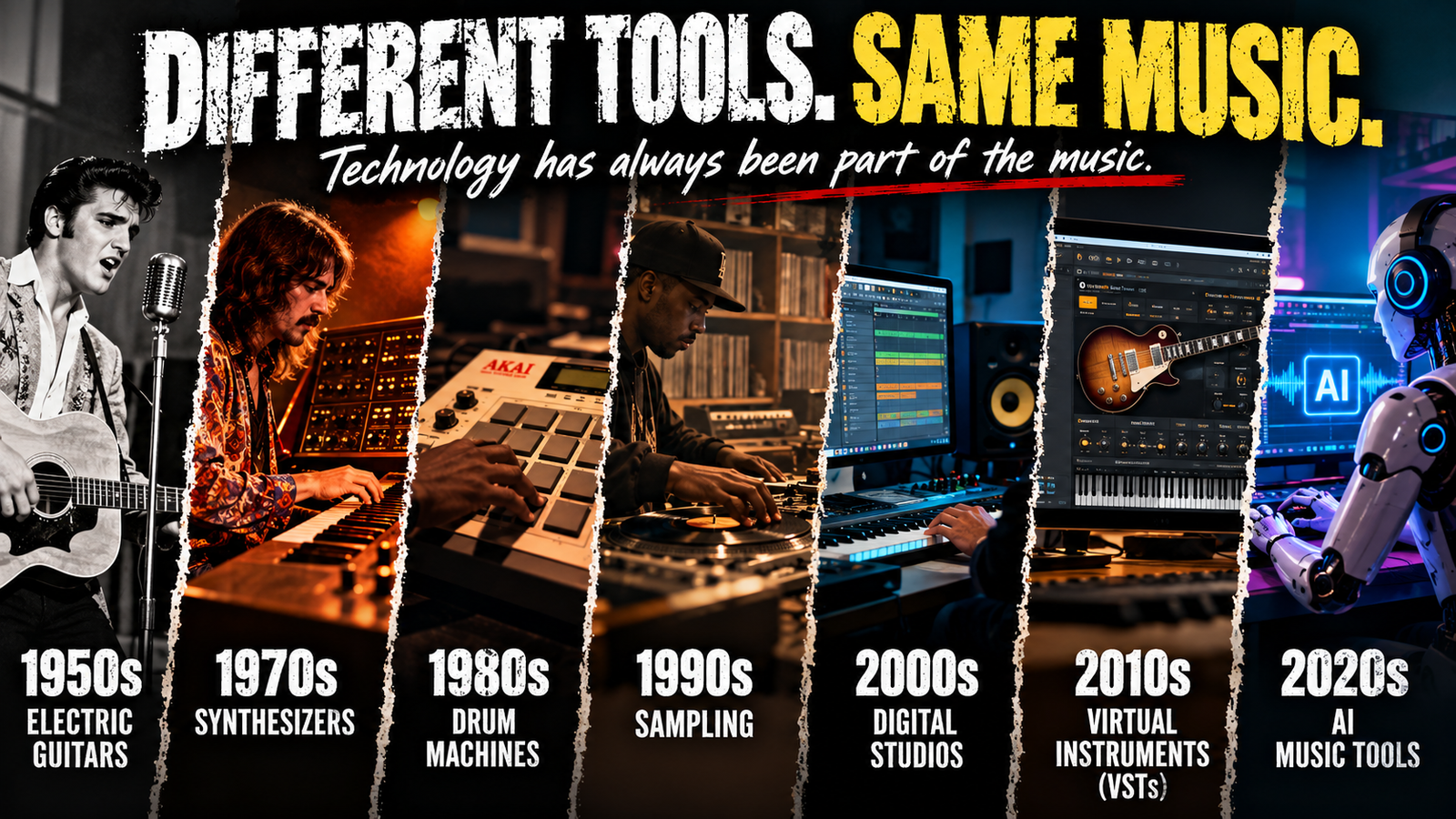
Music has always been a battleground between tradition and technological change. When electric amplification transformed popular music, people worried about what it meant for musicianship and the sound of music. As rock and roll emerged, electric guitars became symbols of a new musical rebellion. Traditionalists complained, parents worried, and critics debated whether these new sounds represented artistic progress or cultural decline. Later came synthesizers, drum machines, samplers, digital recording, MIDI sequencing, and computer-based production. Every generation had its version of the same argument: the new technology isn’t real music, the musicians aren’t doing it properly, the sound is artificial, and the old ways were better.
And yet, here we are. Synthesizers became indispensable to countless genres. Drum machines helped create entire musical movements. Sampling became a defining technique in hip-hop and electronic music, while digital recording transformed studios and made sophisticated production accessible to people who couldn’t afford traditional facilities. I’m not suggesting that every new technology was immediately loved or that every innovation was automatically good. Plenty of experiments failed, plenty of sounds were terrible, and plenty of artists made bad records with expensive equipment. But the larger pattern is undeniable: music keeps absorbing new tools, and the definition of what counts as legitimate music keeps changing.
AI is the latest chapter in that story. You can hate it, resist it, or refuse to use it, but pretending it isn’t going to change music is like standing on a beach yelling at the tide. The tide doesn’t give a shit. The important question isn’t whether change will happen, but how artists, audiences, and the industry will respond to it.
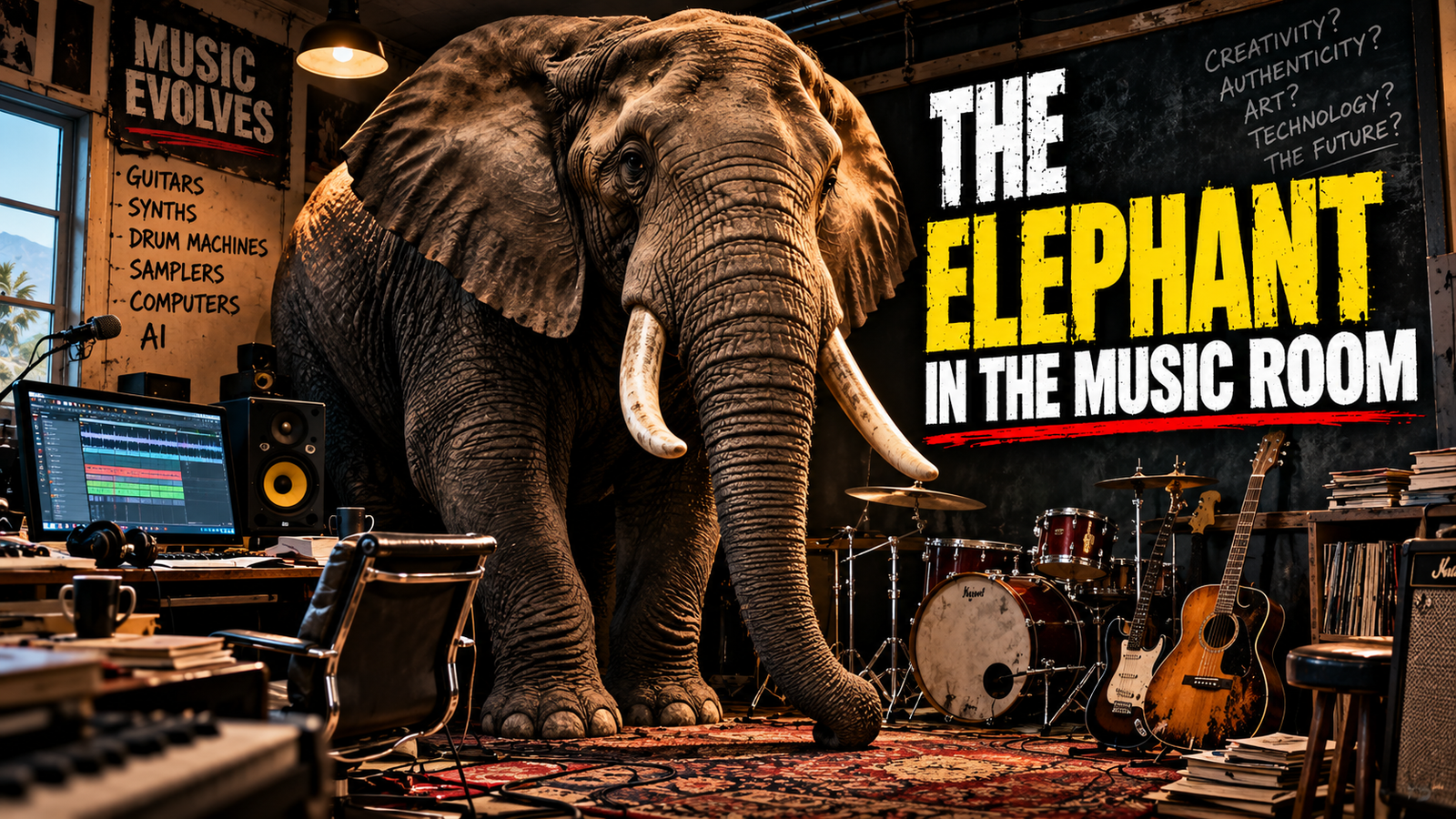
The Elephant in the Music Room
Let’s talk about the elephant in the music room. Everybody has an opinion about AI, and increasingly, people are using it in ways that range from invisible assistance to fully generated musical productions. Some use it to brainstorm lyrics, develop arrangements, explore sounds, generate instrumental parts, create backing tracks, or produce entire compositions. These are not all the same thing. The degree of human involvement varies enormously, and those distinctions matter.
There are legitimate questions about copyright, consent, training data, compensation for musicians, disclosure, originality, and the economic consequences for working artists. Those questions deserve serious answers, and I’m not dismissing them. AI is a powerful and disruptive technology that raises difficult questions about how music gets made, who gets paid, and what we value in art. We should debate those questions honestly rather than pretending every concern is nonsense. But what we shouldn’t do is replace that debate with a two-word insult: *AI slop*. There, problem solved. No listening required, no critical thinking necessary, and no need to consider whether the artist has anything meaningful to say.
The label has become a shortcut for people who want to dismiss an entire category of creative work without examining any individual example. It’s a convenient way to feel intellectually superior without doing the intellectual work. And that is what I find so frustrating. If someone wants to criticize AI music, fine. Explain what’s wrong with the production, the composition, the lyrics, or the creative process. Raise legitimate ethical concerns. Make an argument. But don’t pretend that a technological label is a substitute for artistic judgment.
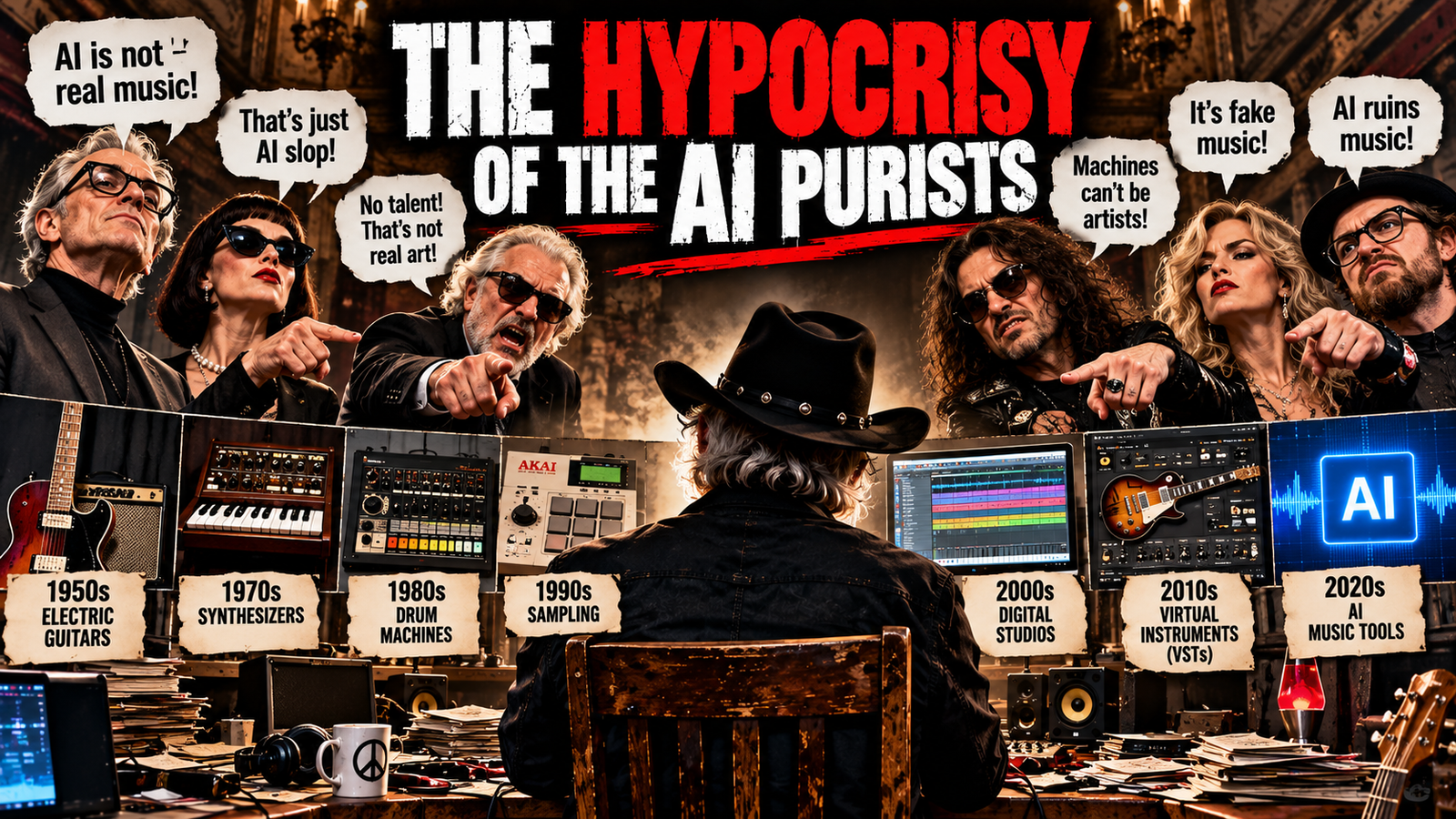
The Hypocrisy of the AI Purists
Here’s another uncomfortable truth: many people who condemn AI-assisted art are perfectly comfortable with other forms of technological assistance, provided those technologies have already earned their approval. They listen to digitally recorded music, programmed drums, synthesized instruments, pitch correction, digital effects, samples, and layers of production that would have been impossible to create in a conventional recording environment a few generations ago. They consume music produced through complex technological processes without demanding a complete inventory of every tool involved. Then AI enters the picture, and suddenly they’re the high priests of musical purity.
Where was this outrage when the drum machine replaced a session drummer? Where was the moral panic when virtual instruments became standard tools in home studios? Where was the demand that every musician physically perform every sound? The answer isn’t that these technologies are identical to AI. They aren’t. AI introduces different capabilities, different risks, and different ethical concerns. But people are often much more comfortable with technological change after it stops feeling like change. Once a tool becomes familiar, we stop seeing the tool and start seeing the music. With AI, we’re still fighting over the tool, and in the middle of that fight, some people have forgotten to listen.
What Does Authenticity Actually Mean?
This is where the argument gets interesting. If I write a song about my life, is it authentic? If I choose the words, determine the emotional direction, develop the concept, select the musical approach, reject what doesn’t work, and use AI to help realize the sound in my head, is the result automatically inauthentic? I don’t believe authenticity can be reduced to a checklist of physical activities performed during production. A song can be recorded entirely with traditional instruments and still be hollow, cynical, manufactured, or dishonest. Conversely, a song made with substantial technological assistance can communicate something deeply personal and meaningful.
The technology doesn’t guarantee authenticity, and neither does the absence of technology. The important questions are more demanding: Who is making the creative decisions? What is the work trying to communicate? Is the artist expressing something they genuinely mean? Does the finished work achieve what the artist intended? And is the artist honest about how the work was made when that information matters? Those are worth discussing, but none of them can be answered by listening to five seconds and typing AI slop. You have to engage with the work, listen to it, think about it, and be willing to separate your feelings about the technology from your judgment of the art. That’s considerably harder than leaving an insult in a comment section.
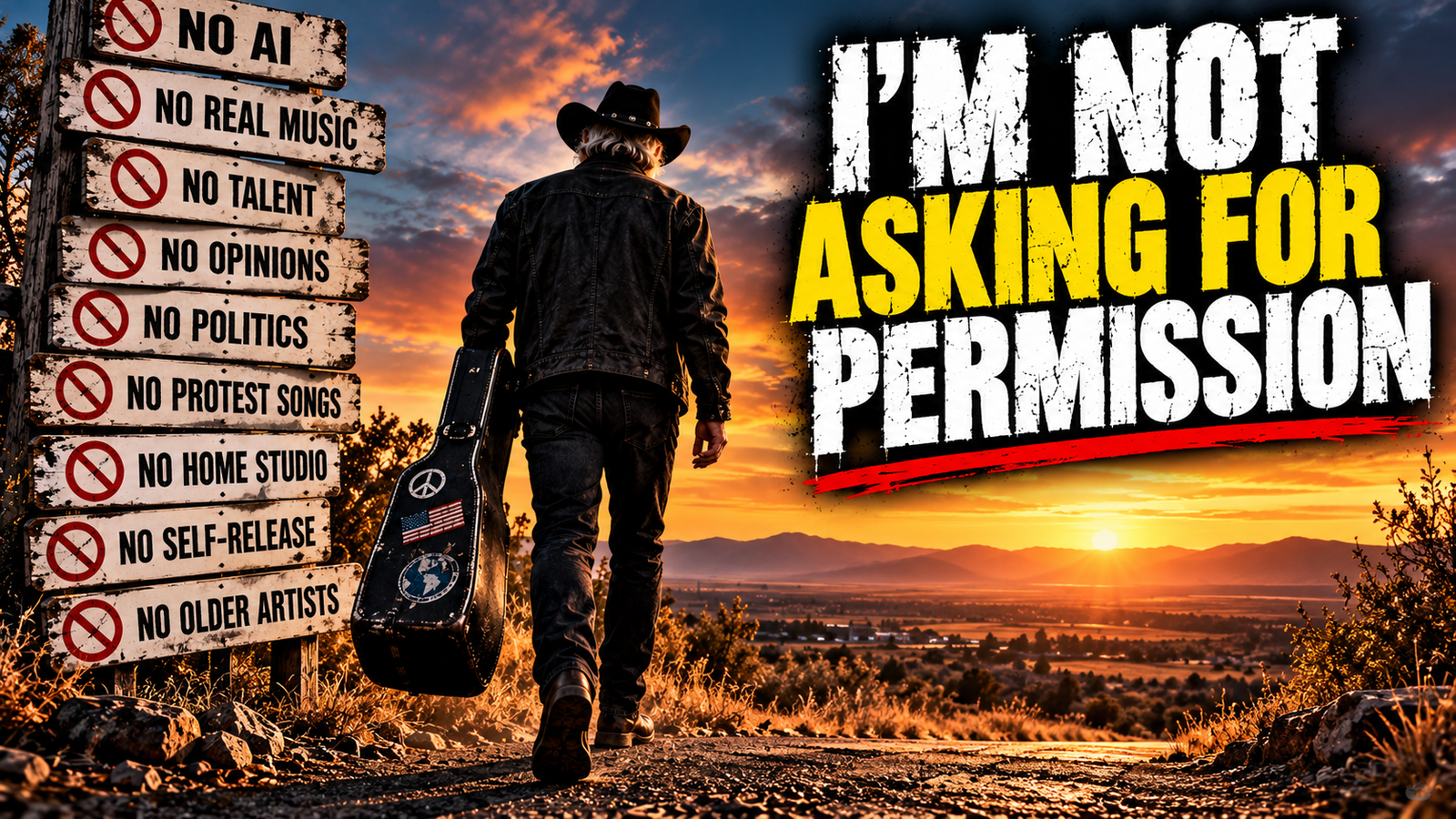
I’m Not Asking for Permission
I’m 62 years old. I’ve lived a life, accumulated experiences, suffered disappointments, developed opinions, and gathered enough memories and political convictions to write songs until the day I die. I have things to say, musical worlds I want to build, and stories I want to tell. I’m not interested in waiting for permission from a committee of strangers who have decided that the only legitimate way to make music is the way they personally approve of. I don’t need to prove that I can play every instrument in an orchestra before I’m allowed to express an idea. I don’t need to hire an expensive studio and assemble a room full of session musicians to justify my existence as an artist. And I certainly don’t need to satisfy the purity tests of people who have already decided they hate the technology I’m using.
I am responsible for my creative choices, my message, and the work I put into the world. If you don’t like the result, fine. Make your argument. Tell me what doesn’t work. Criticize the lyrics, the arrangement, or the production. Tell me the song doesn’t move you. That’s criticism, and I can respect it even when I disagree. But don’t tell me my personal experience isn’t mine because I used technology to express it. Don’t confuse the production method with the human being behind the work, and don’t expect me to apologize for using the tools available to me. I’m not asking your permission to make art. I’m telling you that I’m making it.
AI Won’t Make Everyone a Great Artist. Neither Did the Electric Guitar.
Here’s something the AI enthusiasts need to hear, too: AI isn’t magic. It doesn’t automatically make someone a songwriter, musician, storyteller, or artist. Giving someone powerful tools doesn’t guarantee that they have anything interesting to say. AI can produce mountains of repetitive, derivative, disposable material, make it easier to flood platforms with generic content, and make it harder for listeners to discover work that deserves their attention. Those are real problems, and pretending otherwise doesn’t help anyone.
But none of that establishes that all AI-assisted music is worthless. A guitar can produce beautiful music or an unbearable racket. A synthesizer can create an unforgettable sound or a painfully generic track built around presets. A computer can be used to build a carefully crafted album or generate hours of musical wallpaper. The tool doesn’t settle the question. The artist’s choices matter, the execution matters, the result matters, and so does the listener’s judgment. We don’t need to pretend AI has no downsides to recognize that it opens new creative possibilities. We don’t need to worship the technology or condemn every artist who uses it. We need to grow up enough to discuss the actual work.
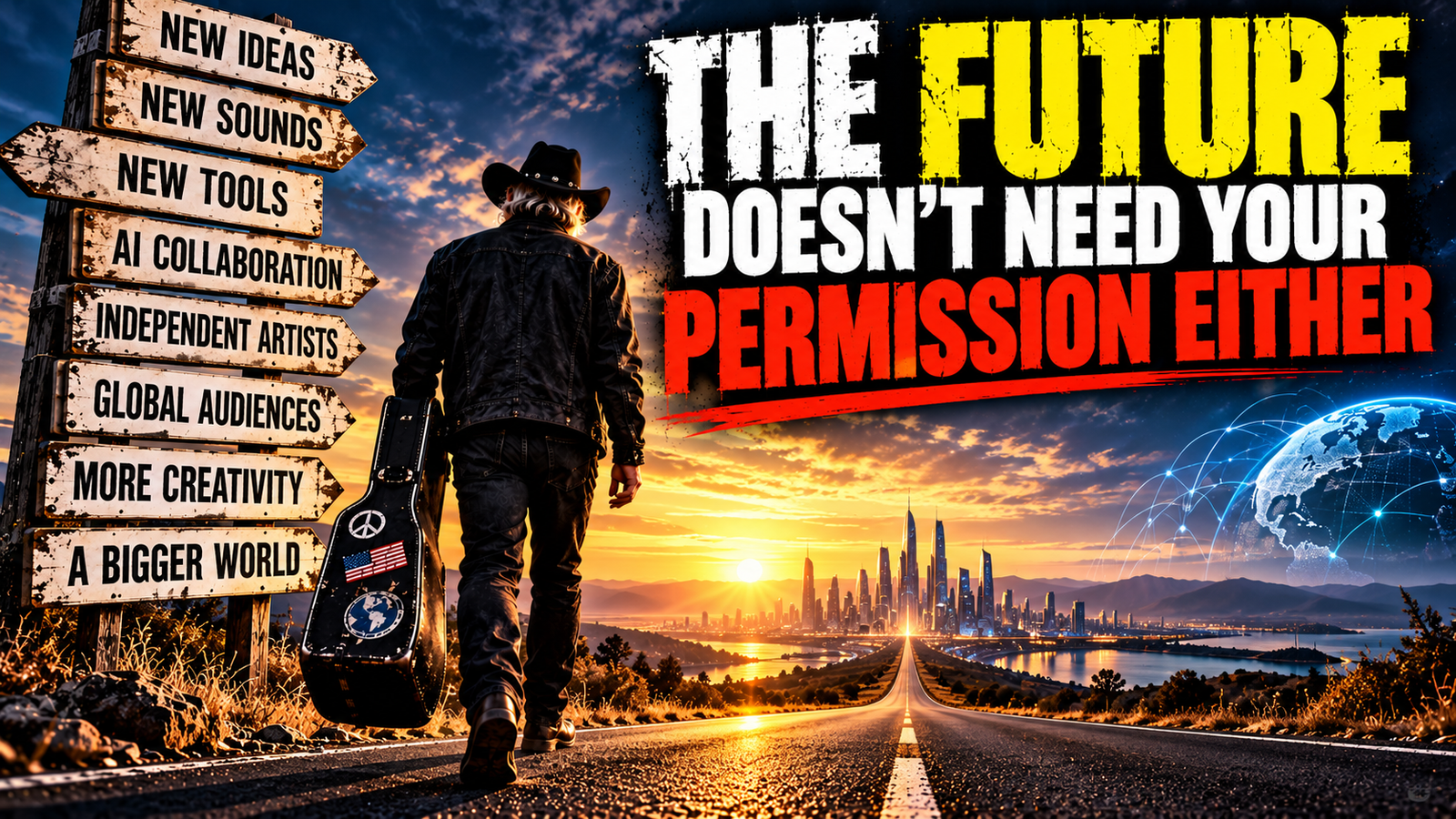 The Future Doesn’t Need Your Permission Either
Here’s what I believe: AI is going to become an increasingly important part of music production. The tools will evolve, the quality will change, the workflows will become more sophisticated, and new forms of collaboration between human beings and machines will emerge. Some artists will embrace these tools, some will reject them, and others will use AI in small ways while still others build entire creative processes around it. Traditional music will continue to exist. Live musicians will continue to perform. People will still want to see a human being onstage, hear a singer’s imperfections, feel the energy of a band in a room, and experience the physical reality of musicians making sound together. AI doesn’t have to destroy those experiences to transform the industry.
The fact that some AI-generated music is mediocre doesn’t mean the technology has no artistic value. The future of music won’t be determined by the loudest people in today’s comment sections. It will be shaped by artists experimenting, listeners choosing, audiences responding, technologies evolving, and an industry struggling to adapt. Some experiments will be brilliant, some will be awful, and most will probably fall somewhere in between. That’s how creative change works. History hasn’t vindicated every new technology, and it doesn’t guarantee that every AI experiment will stand the test of time. But history has repeatedly shown that technological innovations can become integral to music, even when their arrival provokes fierce resistance. The critics who dismiss everything new aren’t going to stop that process. They’re just going to spend a lot of time being angry.
Five Seconds Is Not a Review
Let’s return to Farewell My USA. Five seconds. That’s how long someone needed to decide that my song was AI slop. Not long enough to hear the full message, understand the context, or experience the song as a complete work, and yet somehow long enough to deliver a verdict. I find that more revealing than the insult itself. It tells me something about the way we consume art in the digital age. We’ve become accustomed to instant judgments, instant reactions, instant approval, and instant rejection. We scroll, sample, and dismiss. Now we have people who believe they can identify the artistic value of an entire song before the song has had a chance to begin.
Maybe the real slop isn’t always in the music. Maybe sometimes it’s in the criticism: the automatic response, the reflexive sneer, and the refusal to engage with anything that challenges our assumptions about what art should be. Maybe it’s the idea that we can reduce a person’s creative expression to a technological label and then congratulate ourselves for having an opinion. Five seconds isn’t a review. It’s barely an introduction. If you can’t be bothered to listen to the work, perhaps you should be a little less confident about judging it.
Farewell, My USA. And Farewell to Your Permission.
Farewell My USA is a song about my feelings toward the country I am leaving behind emotionally and politically. It’s an expression of disillusionment, my perspective, and my message. I used the tools I chose to bring it into the world, and I don’t expect everyone to agree with me or like the song. I don’t expect anyone to pretend AI music is above criticism, either. But I do expect the freedom to create without having my artistic intentions dismissed by people who haven’t even listened. That’s not a radical demand. It’s the most basic expectation an artist can have: judge the work, not the assumptions you’ve made about the person who created it.
You can call my song AI slop, hate the sound, hate the technology, or hate the message. But at least have the intellectual honesty to listen before you pass judgment. As for me, I’m going to keep writing songs, making music, experimenting with technology, and saying what I believe, whether the subject is politics, society, personal freedom, or the state of the world. I’m not going to stop because somebody on the internet thinks art must be made according to their preferred set of rules. I have things to say, and I intend to say them.
The technology is changing, music is changing, and the world is changing. Get used to it. The future doesn’t need your permission. And neither does my art.
— Johnny Punish