
By Johnny Punish
There are songs that are written in studios… and then there are songs that are forged—in garages, in back alleys, in the restless heat of youth.
“Protest Guitars” belongs to the latter.
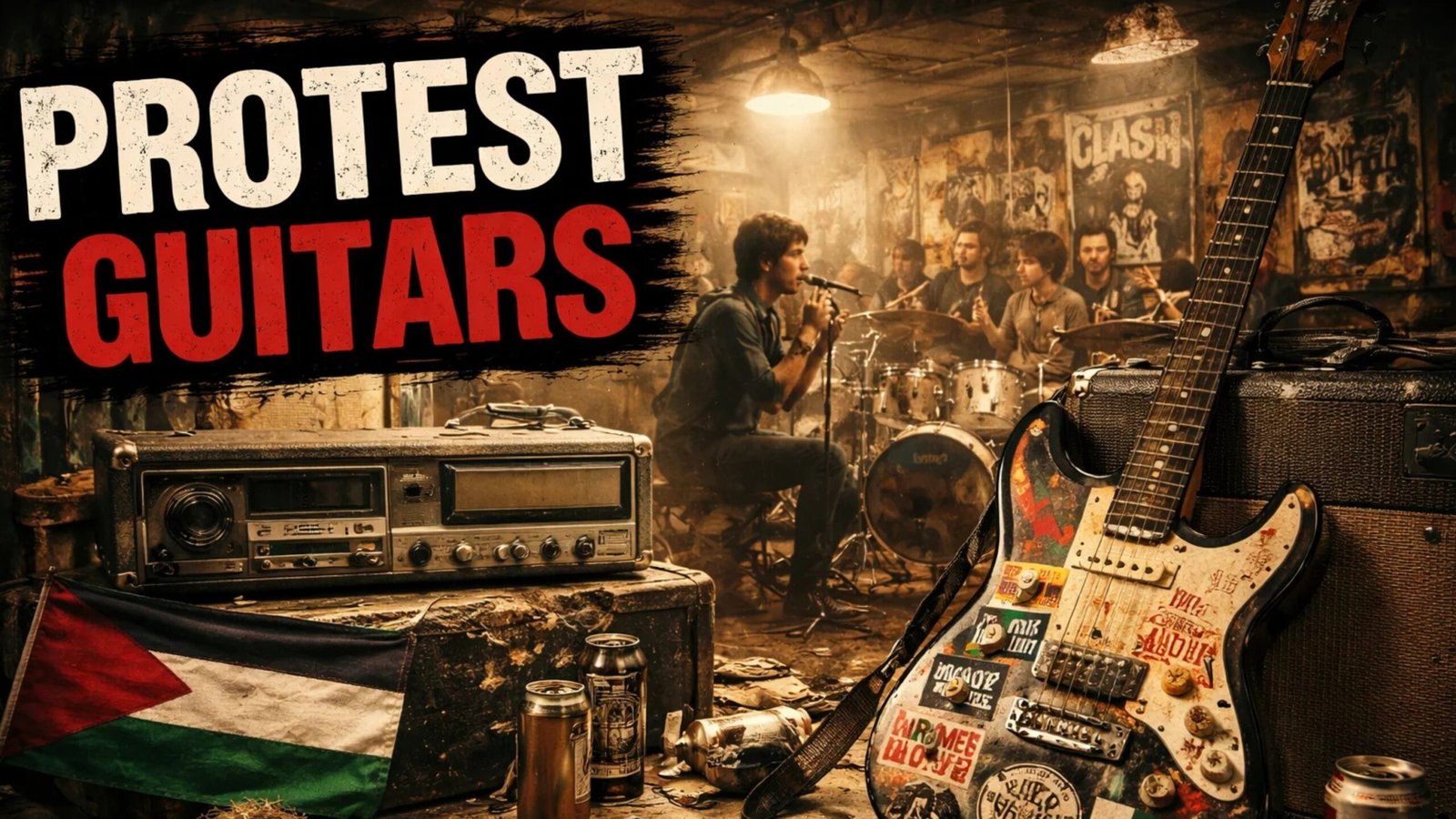
What you’re hearing in this raw demo isn’t just a first draft of a song—it’s a time capsule. A direct transmission from Anaheim, California, circa 1982–1983, when a group of young, wired, and searching souls gathered in a garage behind Joe Allen’s mother’s apartment and unknowingly set the foundation for a lifelong journey into music, protest, and identity.
🔥 The Garage: Ground Zero
The garage wasn’t much to look at—but it didn’t need to be. It was a headquarters. A sanctuary. A launchpad.
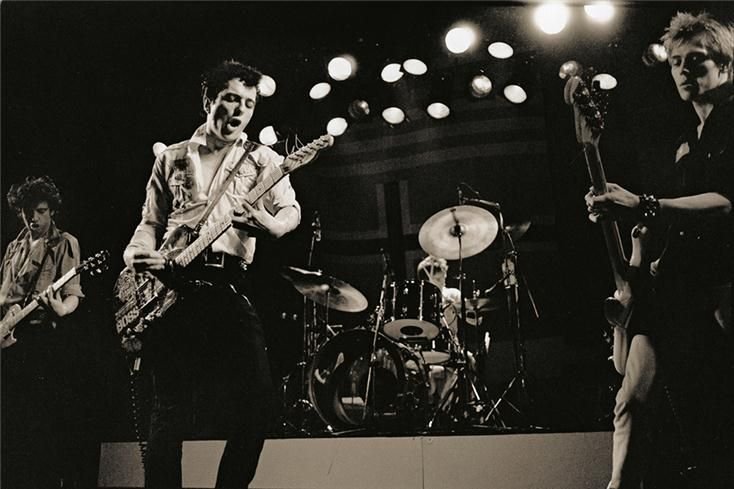
Fresh off my first year at California State Fullerton, I found myself pulled into Joe Allen’s orbit. Joe was older, sharper, and already tuned into something the rest of us were just beginning to hear—a band out of the UK called The Clash.

Once that sound hit the room, everything changed. There was no turning back. No half-measures. Joe had a simple philosophy: you either listened and loved it… or you were the enemy. And we weren’t about to be the enemy.
🎶 Soundtrack of a Movement
The music became our doctrine. A battered white Audi Fox with a barely functioning cassette player became our mobile temple. Inside it lived a single tape—the first Clash record to land on American soil. It played on repeat, all summer long.
Eventually, more relics surfaced: London Calling, Black Market Clash, Sandinista!
Each one deepened the obsession.
Alongside The Clash, another band found its way into our bloodstream: The Plimsouls. Their energy, their urgency—it all fed into what we were becoming.
As a tribute, “Protest Guitars” hides 14 song titles within its lyrics—11 from The Clash, 3 from The Plimsouls. A coded homage to the sounds that shaped us.
🚗 Chaos, Brotherhood, and Purpose
Life wasn’t polished. It wasn’t safe. It wasn’t supposed to be. We drove that beat-up Audi across Anaheim chasing energy, chasing conflict, chasing meaning. Days blurred into nights—filled with arguments, laughter, occasional violence, and a constant hum of rebellion.
Money was scarce. So we improvised. A makeshift “operation” in the garage—scale perched on top of a flickering 12-inch TV—kept gas in the tank and the lifestyle moving. It wasn’t glamorous. It was survival.
Friends drifted in and out. Coffee, conversation, smoke, music. Pipes changed hands. Stories got bigger. Lines blurred.
We weren’t building careers. We were building identity. Then the world broke in. The Sabra and Shatila massacre lit a fuse. What had been attitude became action.
We took to the streets of Los Angeles, confronting groups like the Jewish Defense League outside the Israeli Embassy. The energy shifted from chaotic rebellion to focused protest.
We weren’t just listening to political music anymore. We were living it.
At one point, the movement even brushed mainstream visibility—spilling onto Nightline, hosted by Ted Koppel.
And somewhere along that line, we realized: there was no going back.

🎤 Nights of Noise and Inspiration
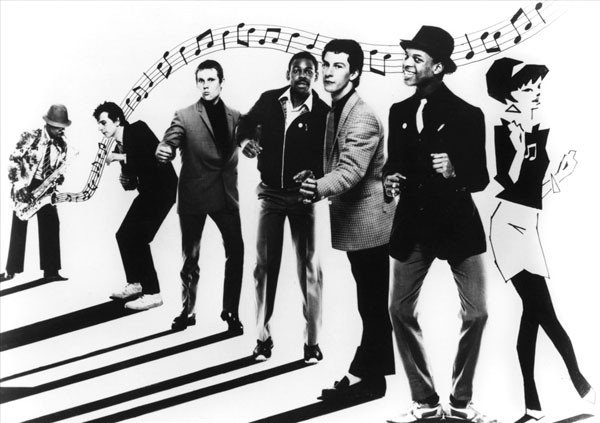
By night, we chased sound. We saw The English Beat open for The Clash at the Hollywood Palladium—a moment that burned itself into memory. Closer to home, The Plimsouls lit up the Cal State Fullerton pub with songs like “Zero Hour” and “Now, Wow!”
Eventually, we took the stage ourselves. Our first performance? Cut short mid-song when they literally dropped the curtain on us. Perfect.
We weren’t there to fit in—we were there to disrupt.
The Backdrop of America
All of this unfolded against the surreal theater of early-80s America. Ronald Reagan on the national stage. The invasion of Grenada. On local television, Wally George shouting through The Hot Seat, turning politics into spectacle.
We watched it all. Absorbed it. Reacted to it. And somewhere in that chaos, our voice sharpened.
🧬 The Legacy of Protest Guitars
“Protest Guitars” is more than nostalgia. It’s origin story. It’s the sound of a group of young men discovering music, politics, brotherhood, and themselves—all at once, all too fast, and all without a safety net.
That garage in Anaheim wasn’t just a place. It was ignition. It eventually led to deeper musical paths, to activism, to bands like Twisted Nixon—but more importantly, it created a mindset that never left.
“YESTERDAY I THOUGHT I WAS A CRUD. THEN I SAW THE CLASH AND I BECAME A KING—AND DECIDED TO MOVE INTO THE FUTURE.”
— JOHNNY PUNISH
🎸 Three Cheers for the Garage
Every movement has a birthplace. For us, it was a cramped garage in Anaheim. Loud. Messy. Unfiltered. Alive. And from that space came a song—raw, imperfect, and honest—that still echoes decades later.
Three cheers for Joe’s Garage.
Our garage. Hooray!