

There was a time when culture happened together. Not metaphorically. Literally. Millions of people would hear the same song at the same moment. Entire cities moved to the same rhythm, pouring out of car stereos, kitchen radios, convenience store speakers, and bedroom alarm clocks. Radio wasn’t just entertainment; it was synchronization. A collective pulse.
Today, we have more access to music than any civilization in human history. Every song ever recorded lives inside our pockets. We have personalized playlists, recommendation engines, AI-generated discovery systems, infinite niche communities, and algorithms that supposedly know us better than we know ourselves.
And yet something feels broken.
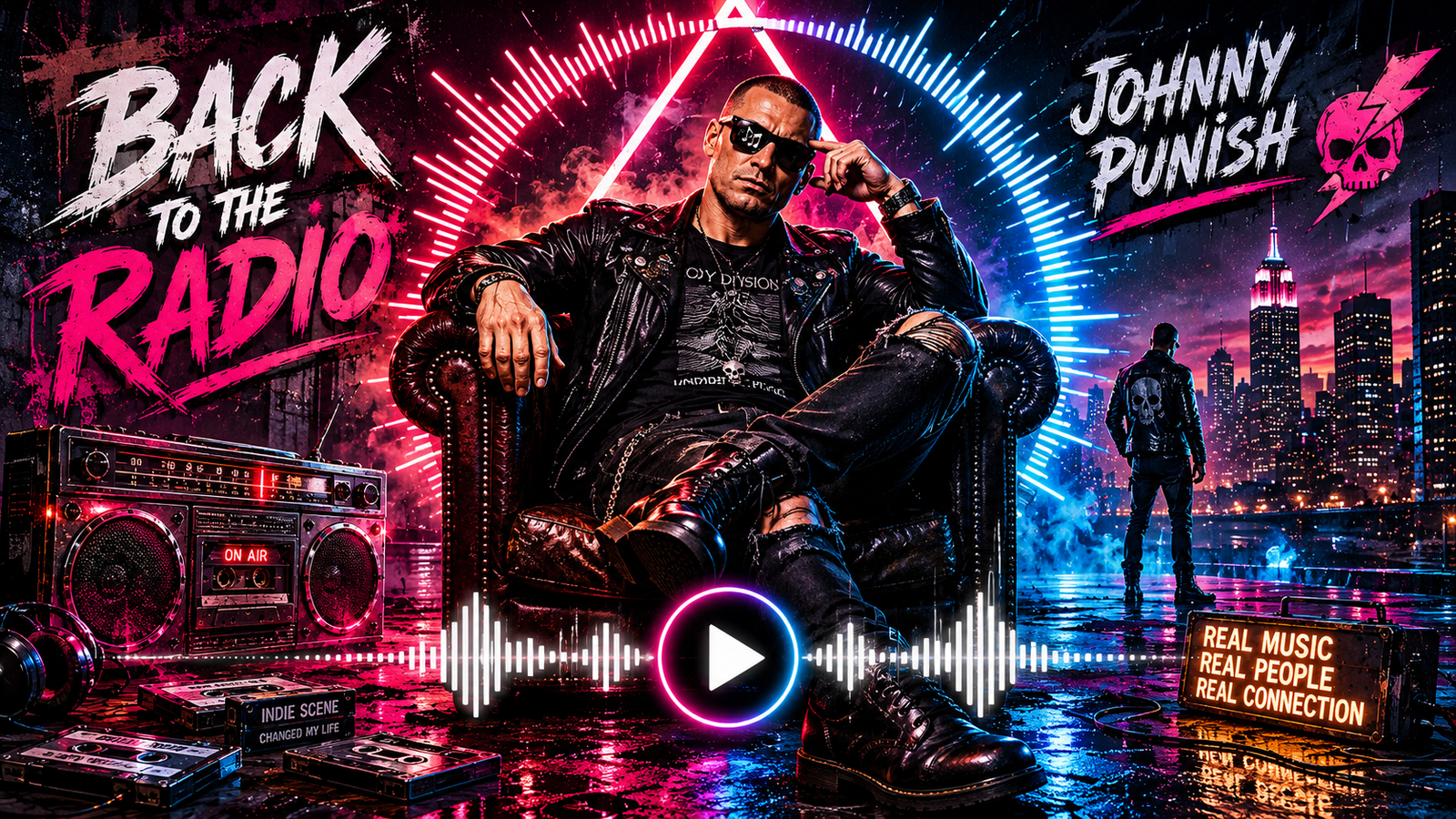
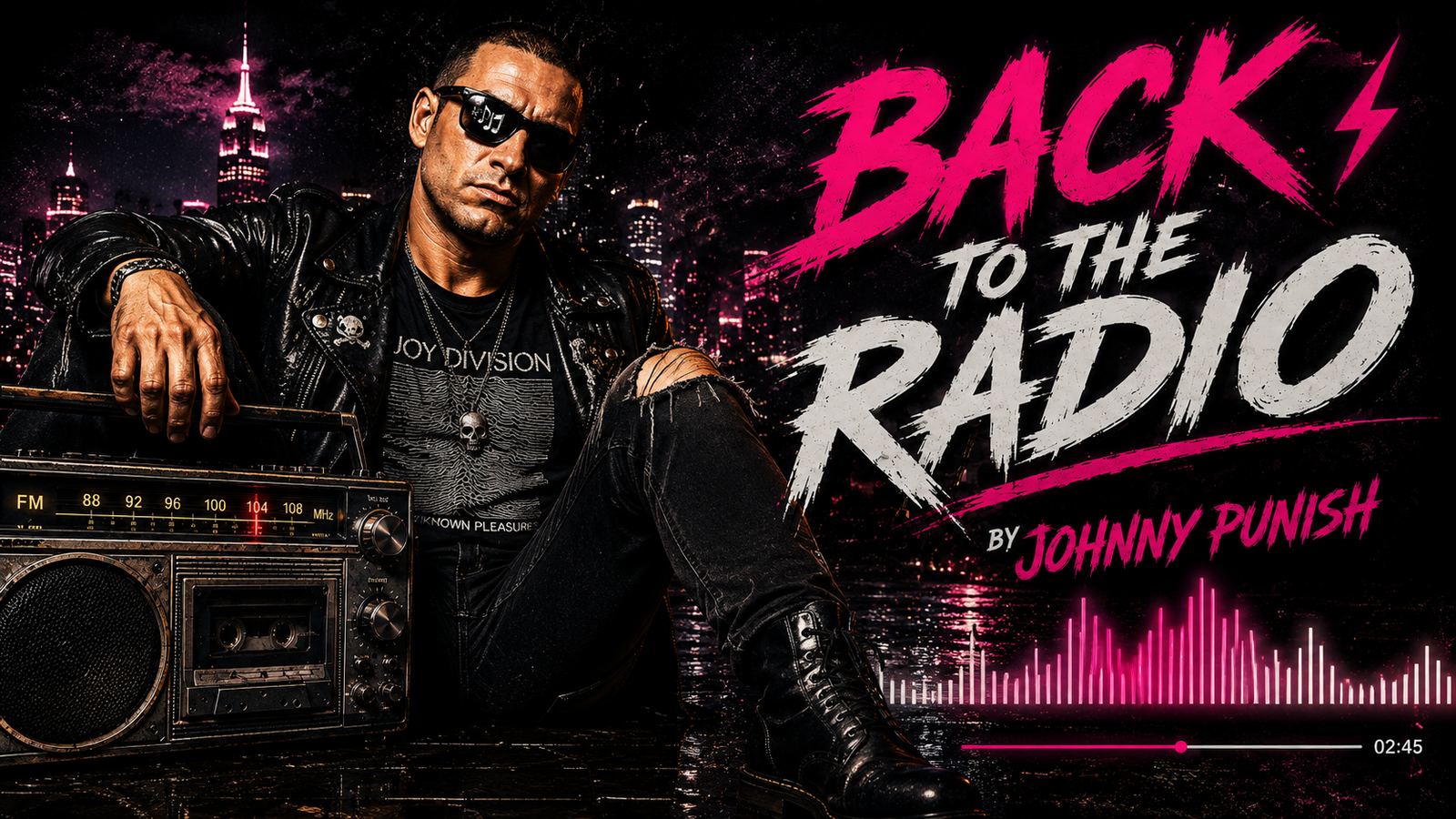
That fracture — emotional, cultural, psychological — is the heartbeat behind *“Back to the Radio”* by Johnny Punish.
The song is not really about radio.
It is about the collapse of shared experience.

The Death of Cultural Gravity
Modern technology promised liberation from gatekeepers. In many ways, it delivered exactly that. Anyone can create. Anyone can publish. Anyone can build an audience.
But there was a hidden cost.
When culture becomes infinitely fragmented, society loses cultural gravity.
In previous decades, people from radically different economic classes, political identities, and personal philosophies still shared common cultural reference points. Whether it was a hit song, a television event, or a legendary concert, there were moments where millions of people psychologically occupied the same room.
That room barely exists anymore.
Today, every individual inhabits a personalized digital reality curated by invisible systems optimized not for truth, beauty, or social cohesion — but for engagement.
The result is profound atomization.
We no longer experience culture together. We consume content separately.
And humans were not designed for permanent psychological isolation.
The Algorithm Knows What You Like — But Not What You Need
Algorithms are extraordinary at predicting preference.
But preference is not wisdom.
The problem with modern recommendation systems is not merely that they divide audiences. It is that they reinforce existing identity structures until people become trapped inside their own psychological echo chambers.
The algorithm feeds your certainty.
It rarely challenges you.
It rarely surprises you.
It rarely unites you with people unlike yourself.
Radio once forced accidental encounters.
You heard songs you would never search for.
You encountered perspectives outside your tribe.
You discovered emotional connections beyond your demographic category.
In many ways, old media created more serendipity than modern media.
And serendipity is one of the essential ingredients of human empathy.
Hyper-Connection and Emotional Starvation
We live in the most connected era in human history, yet rates of loneliness, anxiety, alienation, and social distrust continue to rise.
Why?
Because information exchange is not the same thing as human connection.
Digital culture often creates what psychologists might call “ambient intimacy” — the illusion of closeness without the substance of presence. We see everybody’s thoughts, opinions, meals, arguments, and emotional performances constantly.
But we rarely feel together.
We are overstimulated and undernourished at the same time.
The endless stream of content creates psychological noise without emotional grounding.
That is why nostalgia for radio resonates so deeply.
People are not merely nostalgic for old technology.
They are nostalgic for coherence.
Why “Back to the Radio” Matters
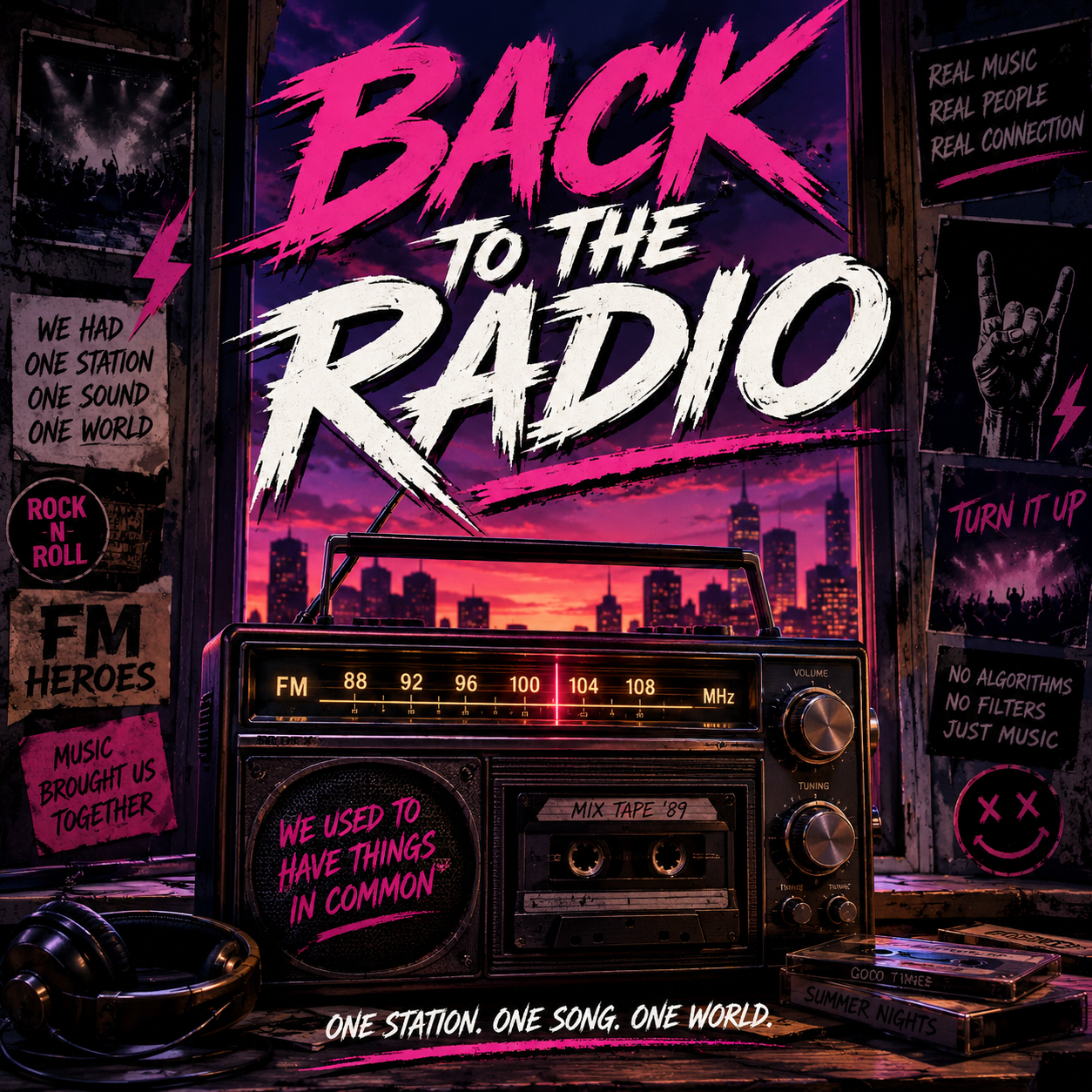
Johnny Punish’s *“Back to the Radio”* taps into something larger than retro aesthetics or 80s/90s nostalgia.
The song identifies a modern existential tension:
How can a civilization become infinitely connected while simultaneously losing its shared soul?
The answer may lie in the architecture of modern attention itself.
When every person becomes their own media universe, society loses common emotional language. Public life becomes fragmented into millions of isolated realities competing for dominance.
And eventually, people stop seeing each other as neighbors.
They begin seeing each other as opposing algorithms.
The song’s rebellious energy is not anti-technology.
It is anti-fragmentation.
It is a protest against cultural disintegration.
Music as Resistance
Historically, music has always served a social function beyond entertainment.
Tribal drumming synchronized communities.
Religious hymns unified belief systems.
Folk songs preserved identity.
Rock and roll created generational consciousness.
Music creates emotional synchronization.
And synchronized emotion is one of the few forces capable of temporarily dissolving social division.
That may explain why live concerts still feel spiritually powerful in the digital age. Thousands of strangers singing the same lyrics in the same moment creates something modern culture increasingly lacks:
Collective emotional reality.
“Back to the Radio” is ultimately a call to recover that feeling.
Not necessarily by abandoning technology, but by recognizing what technology cannot replace.
No algorithm can manufacture belonging.
No platform can automate meaning.
No recommendation engine can substitute for shared humanity.
## Maybe the Real Question Is This
What happens to civilization when people no longer experience life together?
That question sits beneath the distortion guitars and neon-soaked imagery of “Back to the Radio.”
And perhaps that is why the song resonates emotionally.
Because deep down, many people already sense the truth:
We are drowning in communication while starving for communion.
Maybe we do not actually miss the radio.
Maybe we miss each other.
LYRICS
Take me back to the radio
Back where everybody used to know
Back to the Radio…
Everybody’s staring at a different screen
Living in a thousand little broken dreams
Scrollin’ through the static, chasing dopamine
But nobody knows what the hell it means
We used to drive with the windows down
One station playing all across town
Same songs, same fire, same midnight sound
Now we’re lost and we’re scattered around
Too many voices
Too many walls
Too many strangers
In digital halls
We used to sing together
Now we don’t sing at all
Take me back to the radio
Back where everybody used to know
Back to the Radio
The same damn songs on a Saturday night
Back to the Radio
Now every room feels isolated
Every soul overcomplicated
Algorithms got us separated
Everybody angry, overstated
But I remember summer nights
FM heroes and neon lights
One DJ bringing us all alive
One voice cutting through the divide
No filters, no tribes
No endless wars online
Just guitars and truth
And a feeling we were alive
Take me back to the radio
Back where everybody used to know
Back to the Radio
The same damn songs on a Saturday night
Back to the Radio
Hands in the air and the world felt right
Back to the radio
Before we got so cold
Before every heartbeat had its own little show
Take me back
Back to the radio
Turn the dial
Hear the human sound
A million lonely hearts
All together now
No subscriptions
No passwords to belong
Just a city full of strangers
Singing one song
Take me back to the radio
Back where everybody used to know
Back to the Radio
The same damn songs on a Saturday night
Back to the Radio
Hands in the air and the world felt right
Back to the radio
Turn it up
Let the signal roll
Bring us back
Back to the radio
Back to the radio…
Can you hear it calling?
Back to the radio…
—————————
Written by Johnny Punish
Produced by Punish Studios
#RockAndRoll #80sRock #90sRock #ArenaRock #ClassicRock #RetroWave #FMRadio #RockAnthem #NewRock #Nostalgia #SoundtrackOfLife #BackToTheRadio