
USA 250: When Did Patriotism Become a Team Sport?

As America celebrates its 250th birthday, perhaps the greatest act of patriotism isn't proving we're right—it's remembering we're all on the same team.

0
59

On America’s 250th Birthday, perhaps it’s time to remember what united us before we remember what divides us.

Every Fourth of July, millions of Americans gather beneath the same sky. Families fire up backyard grills, children wave sparklers with wide-eyed excitement, neighborhoods fill with the smell of barbecue, and fireworks paint the night in brilliant shades of red, white, and blue. It’s a day that reminds us of a remarkable moment in history—when thirteen colonies declared that ordinary people had the right to govern themselves. It’s a celebration of an idea that changed the world.

But this year, as America marks its 250th birthday, I find myself asking a different question.
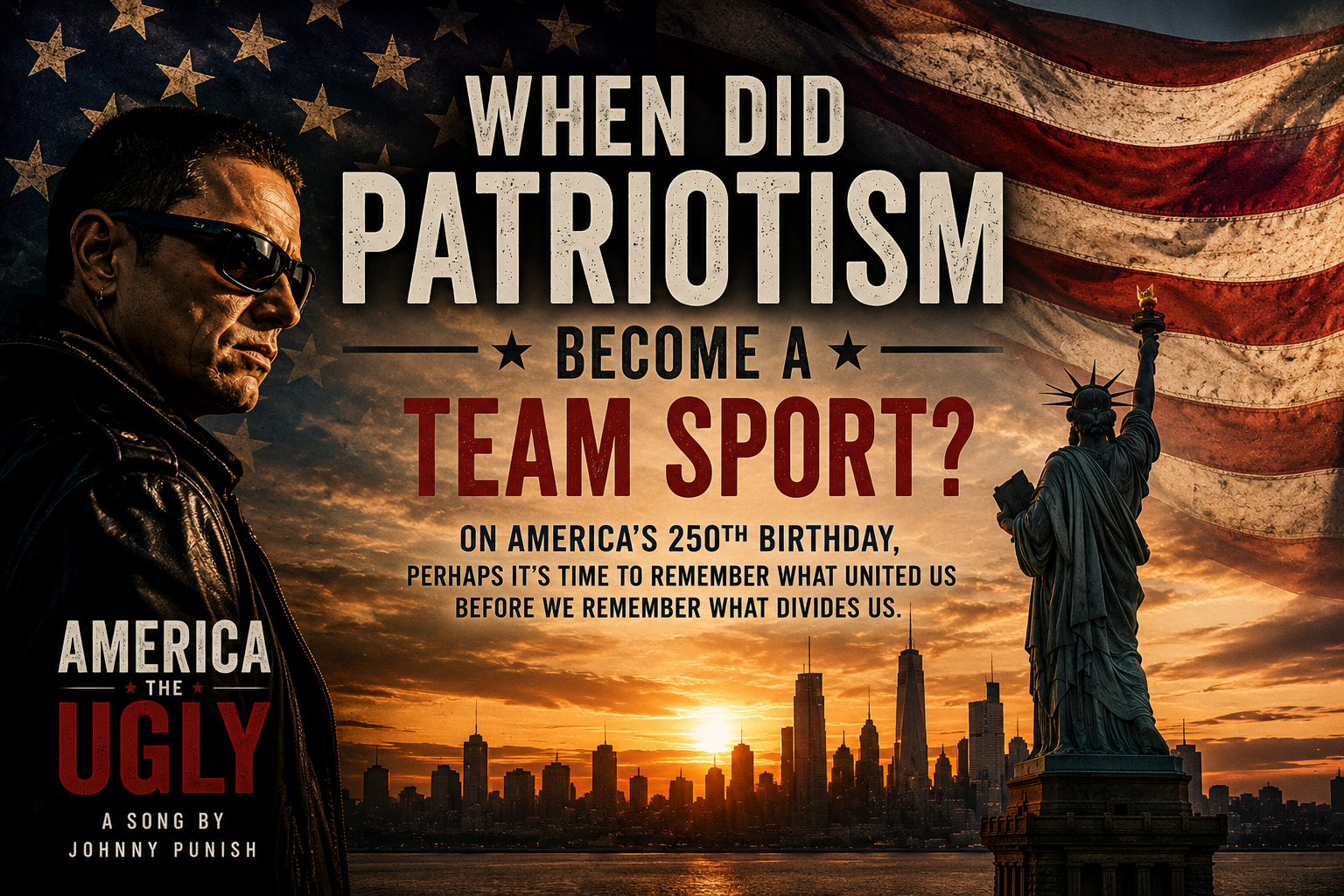
When did patriotism become a team sport?

Somewhere along the way, loving America stopped being something that brought us together and became something we argue about. We no longer simply celebrate our country; we compete over who loves it more. Patriotism has become another battlefield in our endless political war, with each side claiming ownership of the flag while questioning the loyalty of the other.

That’s a tragedy. Because America has never belonged to one political party, one ideology, or one generation. It belongs to all of us.

Today, it’s common to assume we know everything about someone based on a campaign sign in their yard, a bumper sticker on their truck, or a flag hanging from their porch. We sort people into tribes before we’ve even spoken to them. We assume that if someone disagrees with us politically, they must somehow love America less.
I don’t believe that’s true. I think most Americans—regardless of whether they vote Republican, Democrat, Independent, Libertarian, or not at all—love this country in their own way. The disagreement isn’t whether we love America. The disagreement is over what loving America requires of us.

For some people, patriotism means honoring tradition, respecting the Constitution, standing for the national anthem, supporting the military, and displaying the American flag with pride. For others, patriotism means speaking out against injustice, protecting civil liberties, demanding accountability from those in power, and pushing the country to become more inclusive and more faithful to its founding ideals.

Those visions may look different. But they both begin with the same belief:

America is worth caring about.

Unfortunately, we’ve created a culture where criticism is often mistaken for hatred. If you question government policy, you’re accused of being anti-American. If you display the flag proudly, you’re sometimes accused of blind nationalism. We’ve reached a point where symbols often speak louder than conversations, and assumptions have replaced curiosity.  Yet if we look honestly at our own history, America itself was born from criticism.
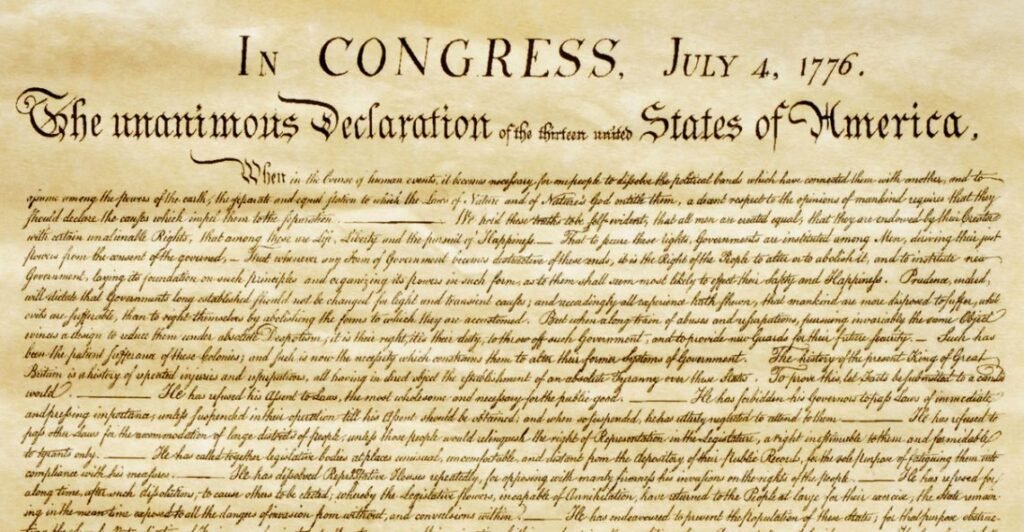
The Declaration of Independence wasn’t written because everything was going well. It was a document of grievances. The men who signed it weren’t rejecting the idea of freedom—they were demanding more of it. They believed governments should answer to the people, not the other way around. They understood that loving one’s country sometimes means refusing to accept its failures as permanent.

That tradition didn’t end in 1776. Abraham Lincoln challenged America to confront slavery because he believed the nation could become more faithful to its founding principles.

Martin Luther King Jr. challenged segregation because he believed America had written a promise that all citizens deserved to share.  Women’s suffrage, civil rights, labor movements, freedom of speech—all of them grew from people who loved this country enough to insist that it become better than it was.

None of those voices weakened America.  They strengthened it.

Perhaps that’s why music has always played such an important role in American life. Every generation has produced songs that celebrate the country and songs that question it. Woody Guthrie, Bob Dylan, Marvin Gaye, Bruce Springsteen, John Mellencamp, Green Day, and countless others have reminded us that music isn’t just entertainment. Sometimes it’s a mirror. Sometimes it’s a challenge. Sometimes it’s a prayer for a nation still trying to become what it promised to be.

That’s exactly why I wrote, “America The Ugly.”

Some people will hear the title and assume it’s an attack on America. It isn’t. It’s a love letter written during a difficult time. It’s a song about disappointment, because disappointment only exists where hope once lived. Nobody grieves the loss of something they never cared about. The lyric that matters most to me isn’t the angry one. It’s the quiet one.

“I still love the dream you promised me… I just don’t recognize you.”

Those words aren’t directed at one president, one Congress, one political party, or one election.  They’re directed at all of us. Because America has always been more than its politicians.  It’s teachers who inspire children. It’s firefighters who run toward danger. It’s immigrants chasing opportunity. It’s small business owners opening their doors every morning. It’s parents working two jobs to give their kids a better future. It’s veterans who served because they believed freedom was worth defending. It’s millions of ordinary people trying to live decent lives in an extraordinary country.

Available on all digital streaming platforms July 5th

On this 250th Independence Day, perhaps we should spend less time asking who loves America more and more time asking how we can love America better. Perhaps patriotism isn’t measured by how loudly we sing the anthem, how large our flag is, or how many slogans we post online. Perhaps patriotism is measured by our willingness to make tomorrow better than today.

To listen before we judge. To disagree without hatred. To remember that our fellow Americans are not our enemies. The founders didn’t give us a finished nation. They gave us an unfinished experiment. Every generation inherits that responsibility.

Now it’s our turn.

And maybe that’s the real meaning of the Fourth of July—not celebrating a perfect America, but recommitting ourselves to the work of building a better one. If “America The Ugly” encourages even one honest conversation about who we are and who we still hope to become, then it has done exactly what I hoped it would do.

Because songs don’t change countries. People do. And every better future begins with people who care enough to imagine one.


AMERICA THE UGLY is my bittersweet alternative rock anthem that asks a difficult question: What happens when the country you love no longer resembles the ideals it once promised?

Inspired by the wit, melancholy, and social commentary of Morrissey and The Smiths with a tinge of THE CLASH, the song explores the growing gap between America’s image and its actions. From endless wars and political corruption to corporate influence and the erosion of public trust, “America The Ugly” is not a song of hatred—it’s a song of disappointment.

At its heart, this is a love letter to an imperfect nation. A lament for a dream that feels increasingly out of reach. Because sometimes the harshest criticism comes from those who still care enough to hope for something better.

“If I didn’t love you somewhere, I wouldn’t still be here.”

LYRICS

O beautiful
For spacious skies
For amber waves of
What the Faaaaaaaaa

America the Ugly
With your fireworks and lies
You put your hand upon your heart
While another city dies

You sell freedom by the acre
You sell justice by the pound
You tell us we’re exceptional
As the ceiling crashes down

And I remember
When I believed every word
Now the truth sounds so much louder
Than the songs I once heard

America the Ugly
What have you become
A trillion-dollar empire
Still pretending to be young

America the Ugly
Wrapped in red white and blue
I still love the dream you promised me
I just don’t recognize you

Ohhhhhhhh Noooooo

Congress counts its donations
While the people count their change
Every promise sounds familiar
Yet somehow nothing changes

The lobbyists write the speeches
The cameras film the show
The voters stand outside the gates
With nowhere left to go

And I remember
When the words meant something more
Now every flag is waving
From a corporate second floor

America the Ugly
What have you become
A trillion-dollar empire
Still pretending to be young

America the Ugly
Wrapped in red white and blue
I still love the dream you promised me
I just don’t recognize you

Mothers crying at the border
Children staring through the fence
Old men talking bout freedom
Without a trace of irony left

Bombs falling in the distance
Paid for with another loan
Everybody wants to save the world
As long as they stay home

America the Ugly
You’re the bully and the friend
The preacher and the gambler
The beginning and the end

You’re every noble story
And every shameful crime
A beautiful contradiction
That gets uglier with time

America the Ugly
What have you become
A giant made of money
Still afraid of what you’ve done

America the Ugly
Wrapped in red white and blue
I still love the dream you promised me
I just don’t recognize you

America the Ugly
I sing because I care
If I didn’t love you somewhere
I wouldn’t still be here

———————
Written and performed by Johnny Punish
Produced by Punish Studios


Resources


America The Ugly is featured on the New Johnny Punish album “Love Letters From The Unholy Land”

Listen to the full album now


#AmericaTheUgly #JohnnyPunish #IndieRock #AlternativeRock #Britpop #PostPunk #MorrisseyStyle #PoliticalRock #ProtestSong #SocialCommentary #IndieMusic #NewMusic #RockMusic #AmericanPolitics #Democracy #Freedom #AntiWar #PoliticalSatire #TheSmithsInspired #SingerSongwriter