
The United States of America feels divided. Every election seems bigger than the last. Every disagreement feels existential. Families stop talking. Friends unfriend each other. Cable news thrives. Social media pours gasoline on every spark.
Sometimes it feels like we’re becoming two countries instead of one, which made me think about Elvis. Not the jumpsuits. Not the movies. Not even the rock and roll. Elvis the American. And what he might say if he were standing on a stage in 2026, looking out at the country he loved.

Elvis and a Nation Divided
Most people know Elvis Presley for songs like “Hound Dog,” “Suspicious Minds,” and “Can’t Help Falling in Love.” Fewer remember one of the most powerful performances of his career: “An American Trilogy.” The song combines three very different musical traditions. “Dixie,” long associated with the Confederate South.
“The Battle Hymn of the Republic,” one of the great songs of the Union. And the spiritual “All My Trials.” On paper, it shouldn’t work. In Elvis’s hands, it becomes something bigger than any one song. It becomes a statement. Not about who won. Not about who lost. But about a country that somehow survived its deepest wound.
The Song Most People Get Wrong
For years, I assumed “Battle Hymn of the Republic” was a Confederate song. I was wrong. It was actually one of the most famous songs of the Union Army during the Civil War. The lyrics were written by abolitionist Julia Ward Howe and were inspired by the marching song “John Brown’s Body.” It was a song about freedom. A song about ending slavery. A song that celebrated the Union cause. Which makes Elvis’s decision to combine it with “Dixie” even more fascinating.
He wasn’t choosing a side. He was bringing the two sides together.

Who Was John Brown?
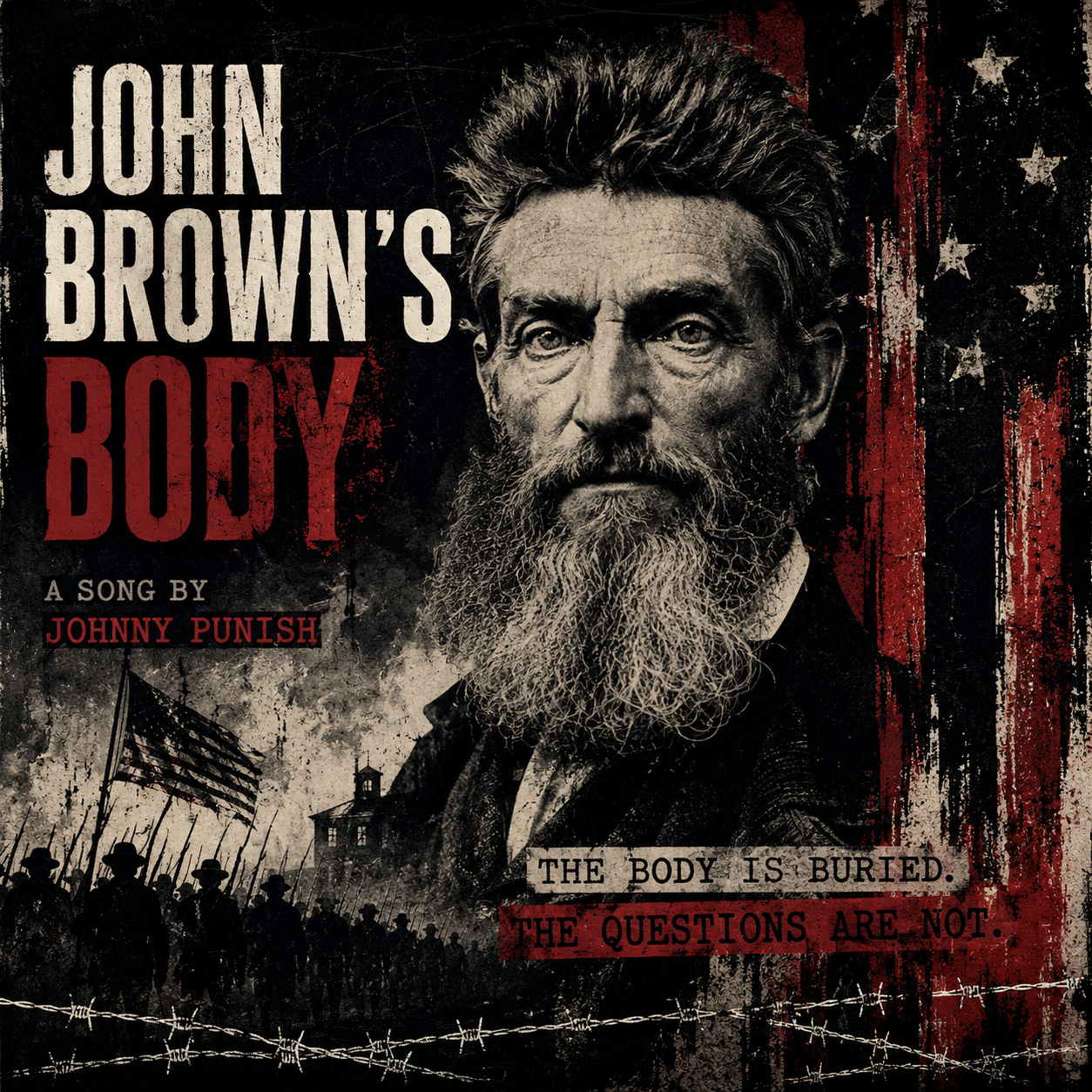
Many Americans have heard the name John Brown. Few know much about him. John Brown was an abolitionist who believed slavery was such a moral evil that words alone would never end it.
In 1859, he led a raid on the federal arsenal at Harpers Ferry, hoping to spark a slave uprising. The raid failed. Brown was captured, tried, and executed. To his supporters, he was a hero. To his enemies, he was a terrorist. To historians, he remains one of the most complicated figures in American history.
But one thing is certain: He forced America to confront a question it had spent decades avoiding. Could a nation dedicated to freedom continue to tolerate slavery?
Within two years of his execution, the Civil War had begun.
The Questions Never Die
History has a funny way of refusing to stay in the past. The names change. The issues change. The technology changes. But the questions remain. What do we stand for? What are we willing to sacrifice? When does obedience become complicity? When does conviction become extremism? Who gets remembered as a hero? Who gets remembered as a villain? Every generation asks these questions. Every generation answers them differently.
What Would Elvis Say in 2026?
I don’t pretend to know. But I suspect he wouldn’t spend much time on social media. I suspect he wouldn’t be interested in cable news shouting matches. And I doubt he would tell half the country to hate the other half. If Elvis taught us anything through “An American Trilogy,” it was that America contains contradictions. North and South. Black and White. Urban and Rural. Liberal and Conservative. Immigrant and Native Born. We don’t erase those differences by pretending they don’t exist. We survive them by remembering that we’re still one country.
The Civil War settled many things. But it didn’t settle everything. The work of becoming America is never finished.
John Brown’s Body
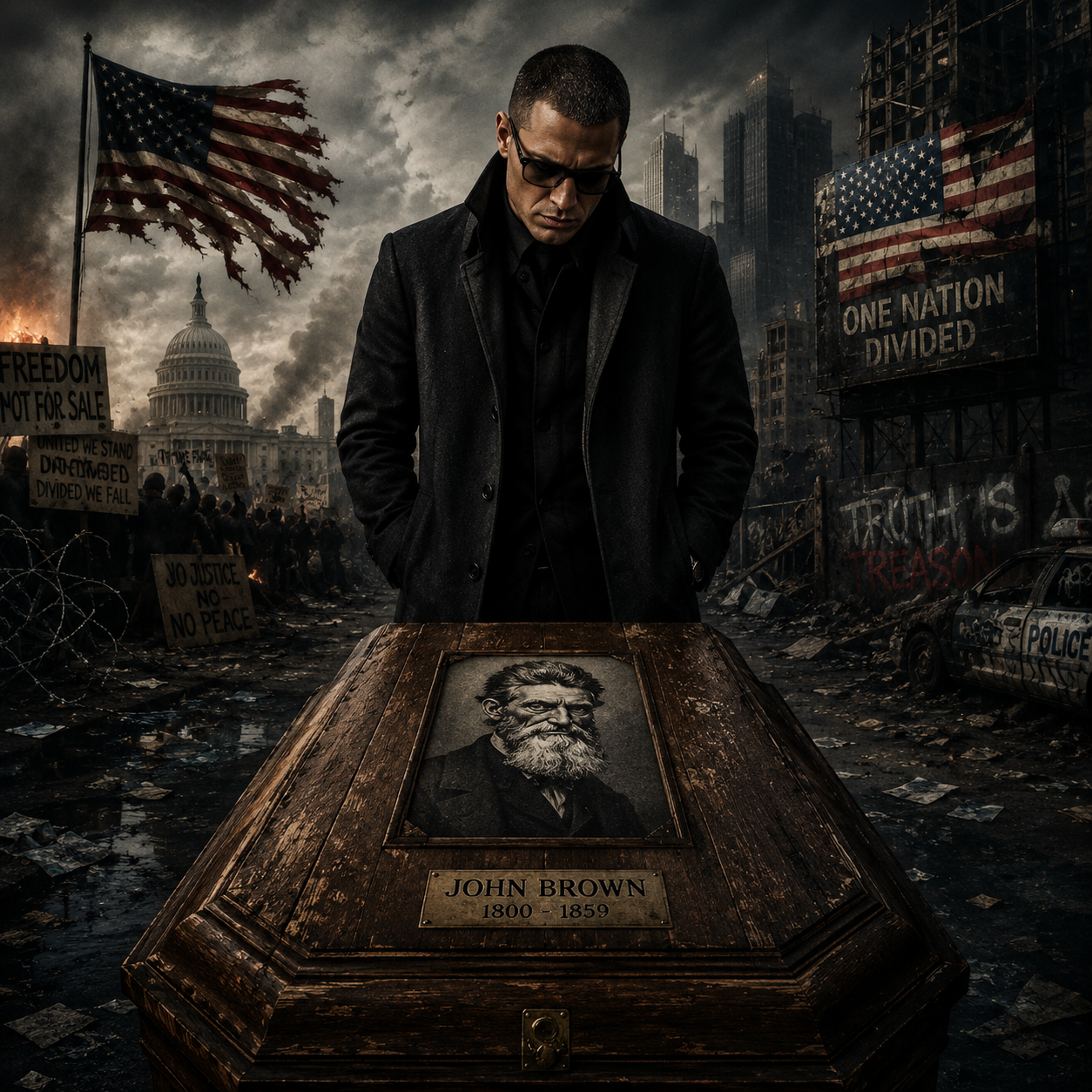
That idea inspired my new song, “John Brown’s Body.” This isn’t a history lesson. It’s a song about conscience. A song about moral courage. A song about the uncomfortable questions that keep resurfacing generation after generation. John Brown is gone. The Civil War is long over.
But the questions are still with us. The body is buried. The questions never die. Listen to “John Brown’s Body” below.
“John Brown’s Body” is a post-punk protest anthem inspired by one of the most controversial figures in American history: abolitionist John Brown. Long before the Civil War began, Brown believed slavery was a moral evil that America could no longer ignore. Some called him a freedom fighter. Others called him a terrorist. More than 160 years later, the debate continues. This song isn’t about taking sides in a history book. It’s about the uncomfortable questions every generation must face:
What do we stand for?
What are we willing to sacrifice?
And what happens when doing the right thing comes at a terrible cost?
Set against driving bass lines, urgent guitars, and a haunting chorus, “John Brown’s Body” explores the tension between conscience and comfort, justice and order, memory and myth.
The body may be buried, but the questions never die.
LYRICS
The papers called him crazy
The rich men called him wrong
The preachers prayed for order
While the chains kept rattling on
The politicians whispered
“It’s not the time, not yet”
But children born in bondage
Were paying someone else’s debt
Everybody saw it
Nobody moved
Everybody knew
Nobody chose
John Brown’s body
Lies beneath the clay
But the questions that he asked us
Never went away
John Brown’s body
Buried cold and still
But the ghost keeps walking
Up and down that hill
He heard the country talking
About freedom every day
But freedom meant one thing
If you were white and walked away
The judges wore their black robes
The merchants counted gold
The law protected property
The property had souls
Everybody saw it
Nobody moved
Everybody knew
Nobody chose
John Brown’s body
Lies beneath the clay
But the questions that he asked us
Never went away
John Brown’s body
Buried cold and still
But the ghost keeps walking
Up and down that hill
Who gets called a hero?
Who gets called insane?
Who writes the history books?
Who profits from the pain?
A country split in two
A country born again
A country still pretending
The fight is over when…
John Brown’s body
Lies beneath the clay
But every generation
Finds a different way
John Brown’s body
Buried cold and still
But the ghost keeps asking
If we have the courage…
If we have the courage…
If we have the will…
The ghost keeps walking
The ghost keeps walking
The ghost keeps walking still…
————————-
Written and performed by Johnny Punish
Produced by Punish Studios
#JohnBrownsBody #PostPunk #AlternativeRock #IndieRock #ProtestSong #ProtestMusic #AmericanHistory #CivilWar #JohnBrown #PoliticalMusic #SocialCommentary #IndieArtist #OriginalMusic #NewMusic #RockMusic #IndependentMusic #Abolitionist #Freedom #Justice #JohnnyPunish
KEYWORDS
John Brown, John Brown’s Body, Battle Hymn of the Republic, abolitionist, American Civil War, slavery, freedom, justice, protest music, post punk, alternative rock, indie rock, political rock, social commentary, historical song, American history, conscience, moral courage, freedom fighter, protest anthem, independent artist, Johnny Punish, modern protest song, underground rock, civil rights, American identity, justice song, political songwriting, historical rock song, indie music, original music