

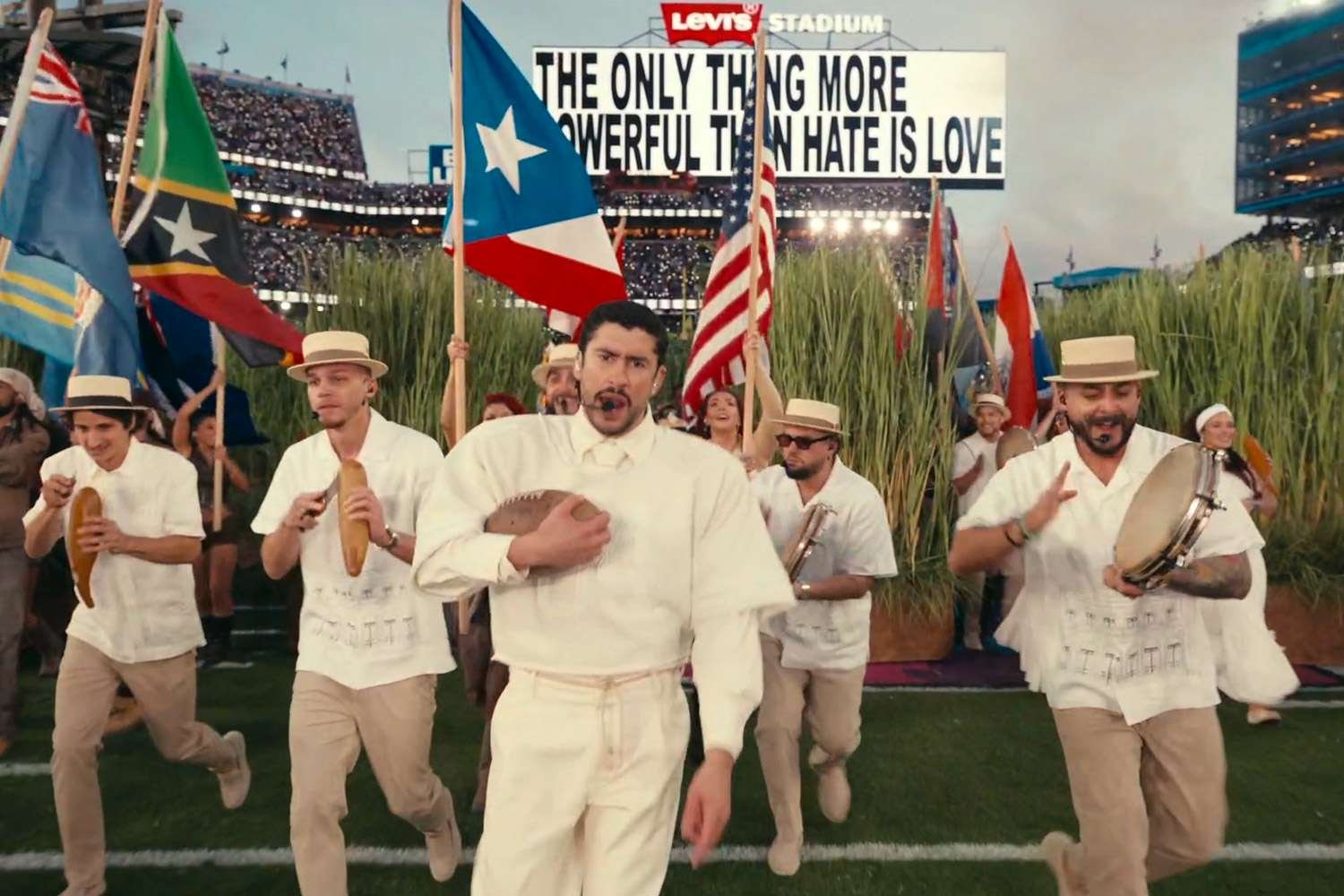
Today, I engaged with people who rated the Bad Bunny halftime show a hard zero.
As the exchanges went on, clear patterns began to emerge. The arguments changed, the tone shifted, but the themes stayed the same. It was striking how many different justifications were offered—often layered on top of one another—to avoid confronting the deeper source of the discomfort.
Many insisted their reaction was simply about the music. It wasn’t.
What they didn’t realize is that this backlash had very little to do with Bad Bunny at all. It was about globalization, rapid cultural change, and the unease societies experience when the world evolves faster than humans are psychologically equipped to handle.
When Culture Wars Are Really About Change
The uproar over a Super Bowl halftime show—whether it was “too foreign,” “too political,” or “not for people like me”—isn’t really about one artist, one language, or one performance. It’s a symptom. A flare-up in a much larger story that isn’t confined to the United States, and certainly didn’t start there.
What we’re watching is the collision between human psychology and accelerated globalization.
And humans, frankly, were never built for change at this speed.

Globalization Didn’t Start With the Internet
It’s tempting to blame globalization on smartphones, social media, or streaming platforms—but the roots go back much further.
One of the clearest early markers came in 1928, in a quiet meeting at Achnacarry Castle in Scotland. Executives from Standard Oil of New Jersey, Royal Dutch Shell, and Anglo-Persian Oil Company (later BP) gathered to coordinate pricing, production, and global reach. This wasn’t just business cooperation—it was the early blueprint for multinational corporate power operating beyond national borders.
The world economy was beginning to knit itself together.


The Corporate Age Goes Global
By the 1950s and 1960s, globalization accelerated through corporations like IBM, which didn’t just sell machines—it standardized systems, processes, and ways of thinking across borders. American business culture, technology, and management practices began spreading worldwide.
Still, change moved at a human pace:
- News traveled slowly
- Culture diffused over decades
- Identity had time to adapt
People could absorb it.

Then the Internet Hit the Accelerator
Everything changed around 2004, when the internet truly went global and interactive:
- Broadband replaced dial-up
- Social media emerged
- YouTube, Facebook, and later smartphones collapsed distance
For the first time in history, local cultures were exposed to global influence instantly, constantly, and unfiltered.
Music, language, fashion, politics, outrage—everything crossed borders at the speed of light.
That’s not evolution. That’s shock.

Humans Don’t Adapt That Fast
Biologically and psychologically, humans evolved for:
- Slow generational change
- Stable cultural norms
- Clear in-group / out-group boundaries
Globalization shattered those guardrails.
When people feel overwhelmed, they don’t usually say:
“I’m anxious about rapid cultural change.”
They say:
- “This doesn’t feel like my country anymore.”
- “They’re forcing this on us.”
- “We need to go back.”
That reaction isn’t unique to the U.S.

This Is Happening Everywhere
- Brexit wasn’t really about trade policy—it was about cultural whiplash and loss of perceived control.
- Nationalist movements across Europe, Asia, and Latin America follow the same pattern.
- Immigration, language, music, and symbols become lightning rods for deeper anxiety.
The past becomes romanticized—not because it was perfect, but because it felt understandable.
The tragedy?
That past doesn’t exist anymore—and can’t be restored.

The Leadership Failure
This is where the real problem lies.
Strong leaders challenge their people to grow.
Weak leaders promise to rewind.
Promising a return to a simpler, closed, pre-global world is comforting—but it’s also impossible. World trade, digital culture, migration, and interconnected economies cannot be undone without catastrophic consequences.
Yet many leaders choose the easy lie over the hard truth.
They tell people:
- “We’ll bring it back.”
- “We’ll stop the change.”
- “We’ll make it like it was.”
That’s not leadership. That’s emotional outsourcing.

Love Over Hate Isn’t the Problem—It’s the Test
When an artist stands on a global stage and says,
“The only thing more powerful than hate is love,”
and that message triggers outrage, the issue isn’t the message.
It’s the discomfort of a world that no longer centers any single culture, language, or identity.
Globalization doesn’t ask permission.
It doesn’t slow down.
And it doesn’t care who feels left behind.
The question isn’t whether people will like that reality.
The question is whether leaders will help people rise to meet it—or keep selling nostalgia as a solution.
Because nostalgia is easy.
Leadership is not.